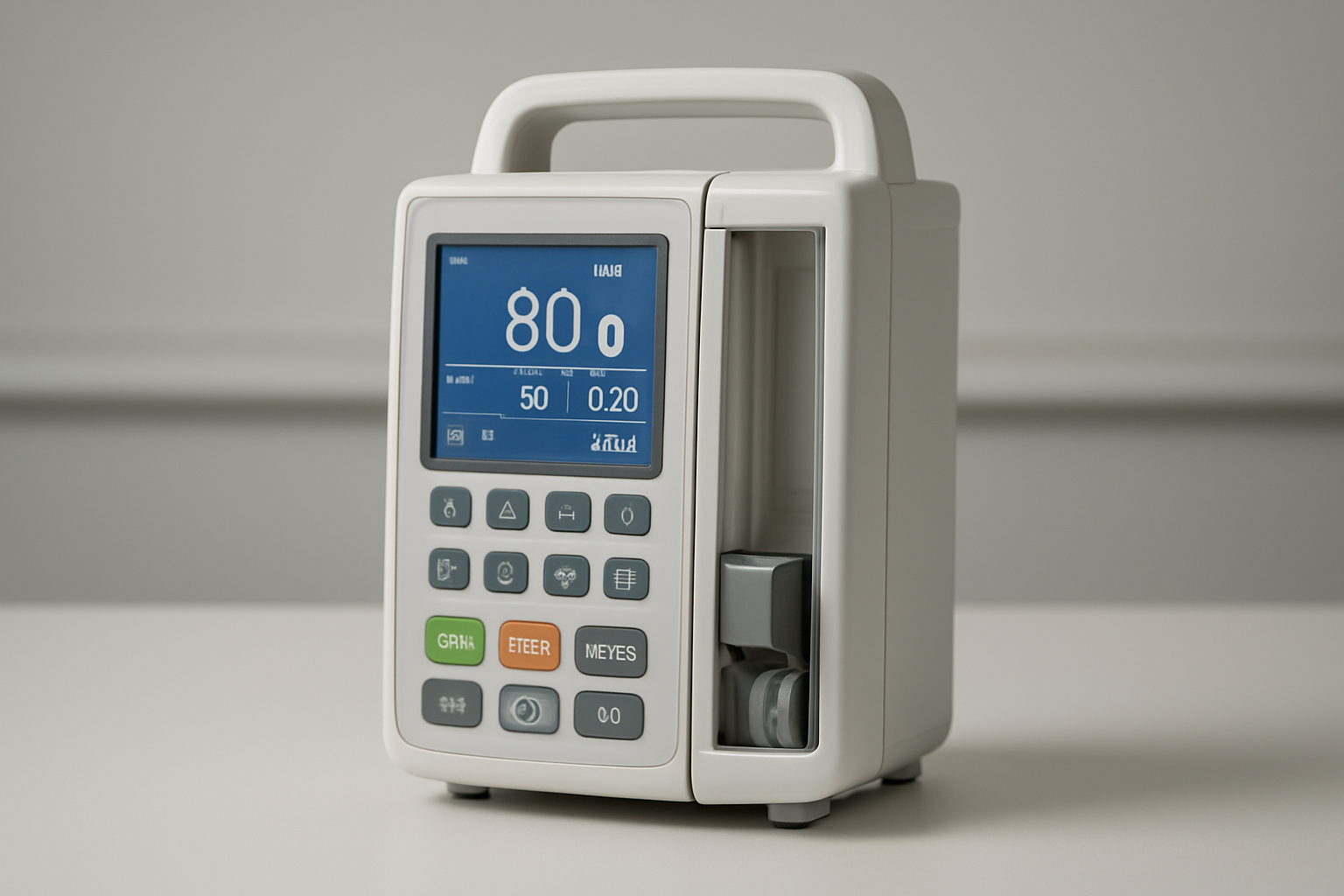
An infusion pump buying guide should start with the part buyers often leave until last: the disposable. For many volumetric pumps, the pump and the giving set are tied together, so the unit you choose can also lock you into one consumables path for years. That affects annual cost, supplier flexibility and stock planning far more than a spec sheet headline. Before you compare screens, alarms or menu layouts, confirm what consumables the pump accepts, what those references cost, and whether your service team can support the fleet you plan to run.
Volumetric or syringe pump: which does the work you actually do?
Start with the jobs the pump will handle in your facility, not with brand preference. In simple terms, volumetric pumps and syringe pumps solve different purchasing problems. If your team is standardising a ward, day clinic or transport setup, list the workflows first and then map them to the pump type you actually need.
Volumetric pumps are usually considered when the facility wants an administration-set-based platform for general infusion workflows. Syringe pumps are usually considered when the setup depends on syringe-based delivery and the available syringe families matter just as much as the device itself. In both cases, the practical buying question is the same: what disposable family does this decision commit you to?
If you are comparing categories, keep the buying exercise focused. Review the pump options within your available injection equipment category, then check how they will sit alongside the bedside devices already in use, including patient monitoring systems. For a fleet purchase, consistency across mounting, transport and service support often matters more than any single feature line in a brochure.
For used or refurbished stock, ask one more question early: are you trying to match an installed base or replace it. If you already hold stock of a specific disposable family, staying with the same platform may reduce purchasing friction. If you are replacing an older platform, this may be the right time to recheck the long-term consumable model rather than simply buying like for like.
![[BLOG] Infusion Pump Buying Guide: What to Check First - infusion pump buying guide](https://emtrading.de/wp-content/uploads/2026/09/infusion-pump-buying-guide-what-to-check-first-image-1.png)
Which giving sets and syringes will this pump accept, and what will they cost per year?
This is the section that should lead the decision. Many buyers start with pump features and only later discover that the real cost sits in the consumables. A strong infusion pump buying guide puts set compatibility first because the pump may determine your consumable supplier for the next decade.
For volumetric pumps, do not assume that one manufacturer’s set family will work across another manufacturer’s device, or even across different models from the same brand. Compatibility can be model-specific and may also depend on the exact software version or approved accessory list. The safe commercial approach is to confirm the set reference number against the manufacturer’s own compatibility list for that exact pump model and software version. Get that confirmation in writing from the seller.
The same principle applies to syringe pumps. Do not treat “50 ml syringe compatible” as enough detail for procurement. Ask which syringe brands, sizes and reference families are accepted for the exact unit offered. Then confirm what your own supply chain can actually source on stable terms.
When you compare offers, build a simple annual arithmetic model. Use your own estimated monthly set or syringe consumption, then compare that demand against quoted consumable references and supply terms. You do not need speculative savings claims to see the issue. If one pump family requires a higher-cost or harder-to-source disposable, the difference repeats every month across every bed, chair or transport setup using that platform.
Ask suppliers for these points in writing:
- the exact pump model and offered software version
- the exact giving-set or syringe reference families the seller says are compatible
- whether the pump is configured for the disposable family you plan to buy
- the current consumable source and lead-time expectation
- any minimum-order or packaging constraints that affect stores planning
This is also where new versus serviced used stock becomes a practical discussion rather than a branding discussion. A lower purchase price on the pump can be offset later if the approved disposable is expensive, scarce or available from too few channels. Equally, a used fleet that matches an installed consumables contract may still be the more economical decision. The key is to model the whole deal, not just the capital line.
What should you check on the battery, pole clamp and stacking hardware?
Once consumables are clear, move to the parts that affect day-to-day handling. Battery condition, pole mounting and stacking hardware influence whether the pump fits your real environment. They also affect refurbishment scope and future service cost.
On the battery side, ask the seller to define the battery status in plain commercial terms. Do not accept vague wording such as “holds charge” without clarification. Ask whether the battery is new, tested, replaced during service or simply present. Ask what test evidence the seller can provide and what is excluded from the quotation. If the fleet will move between chairs, poles, bays or transport trolleys, poor battery condition becomes an operations problem quickly.
Next, inspect the pole clamp and mounting points. A pump that is acceptable on paper may still be awkward if the clamp does not suit your pole diameters, existing rails or transport hardware. Check whether the clamp is original, replaced, damaged, loose or missing parts. Ask whether stacking brackets, docking parts or carry handles are included, because missing hardware often appears only after delivery.
For multi-pump setups, confirm how the pumps will be mounted in practice. Can they stack as supplied. Are the required brackets included. Does the offered configuration match your existing poles and carts. Small accessory gaps can create avoidable follow-on orders and delays.
Used equipment buyers should also ask what cosmetic wear means in functional terms. Scratches may be irrelevant. A worn latch, damaged clamp thread or cracked housing around a mounting point is not. Request clear photos of the rear housing, clamp, battery compartment area and any stacking interfaces before approving a fleet lot.
Service support matters here as well. If your internal team or external partner will maintain the pumps, make sure parts access is realistic and that routine work can be planned through a reliable provider for medical equipment repair, maintenance and testing. A lower upfront price is less attractive if common wear items turn into long downtime or fragmented service responsibility.
![[BLOG] Infusion Pump Buying Guide: What to Check First - infusion pump buying guide](https://emtrading.de/wp-content/uploads/2026/09/infusion-pump-buying-guide-what-to-check-first-image-2.png)
What do drug libraries, software versions and service access change about the deal?
This is where buyers often return to the specification sheet, but the useful question is narrower. Which software-dependent functions matter to your facility, and can the seller document the exact version on the unit offered. For fleet purchases, mixed software versions can complicate setup, training and service records even when the housings look identical.
Drug libraries are part of that discussion, but keep the procurement question practical. Do not assume a library is present, current, transferable or configured for your facility. Ask whether the unit supports library functions, what version is installed, how updates are handled and what access the buying facility would have after purchase. If your site does not intend to use those functions, that should also be clear so you do not pay extra for a capability you will not manage.
Service access can change the value of the deal more than a front-panel feature. Ask who can service the model in your region, what documentation is available, whether common replacement parts can still be sourced, and what the seller includes before shipment. For refurbished stock, ask specifically what work was completed, what tests were performed and what remains the buyer’s responsibility on receipt.
That last point should stay explicit. Acceptance testing and flow-accuracy verification are the buying facility’s own responsibility and must be done by a qualified biomedical technician. Procurement should treat the seller’s service report as part of the file, not as a substitute for the facility’s incoming inspection process.
Only after these points should you compare the familiar spec-table items such as screen format, keypad layout, alarm presentation, weight and general physical footprint. Those details still matter. However, in a real fleet decision they usually come after consumables, hardware condition, serviceability and software traceability.
A practical infusion pump buying guide therefore works from long-term cost outward. First confirm the approved disposable family and its supply implications. Then confirm battery condition and mounting hardware. Then document software version, service access and incoming test responsibility. The spec table is still useful, but it should validate a decision you have already narrowed commercially, not drive the decision on its own.
In short, buy the pump type that fits your actual workflow, but choose the platform only after checking the consumable commitment in writing. Then verify battery, clamp and stacking condition, and document software and service support before release. That sequence will usually save more time and cost than starting with a brochure comparison.
Ratings and Reviews