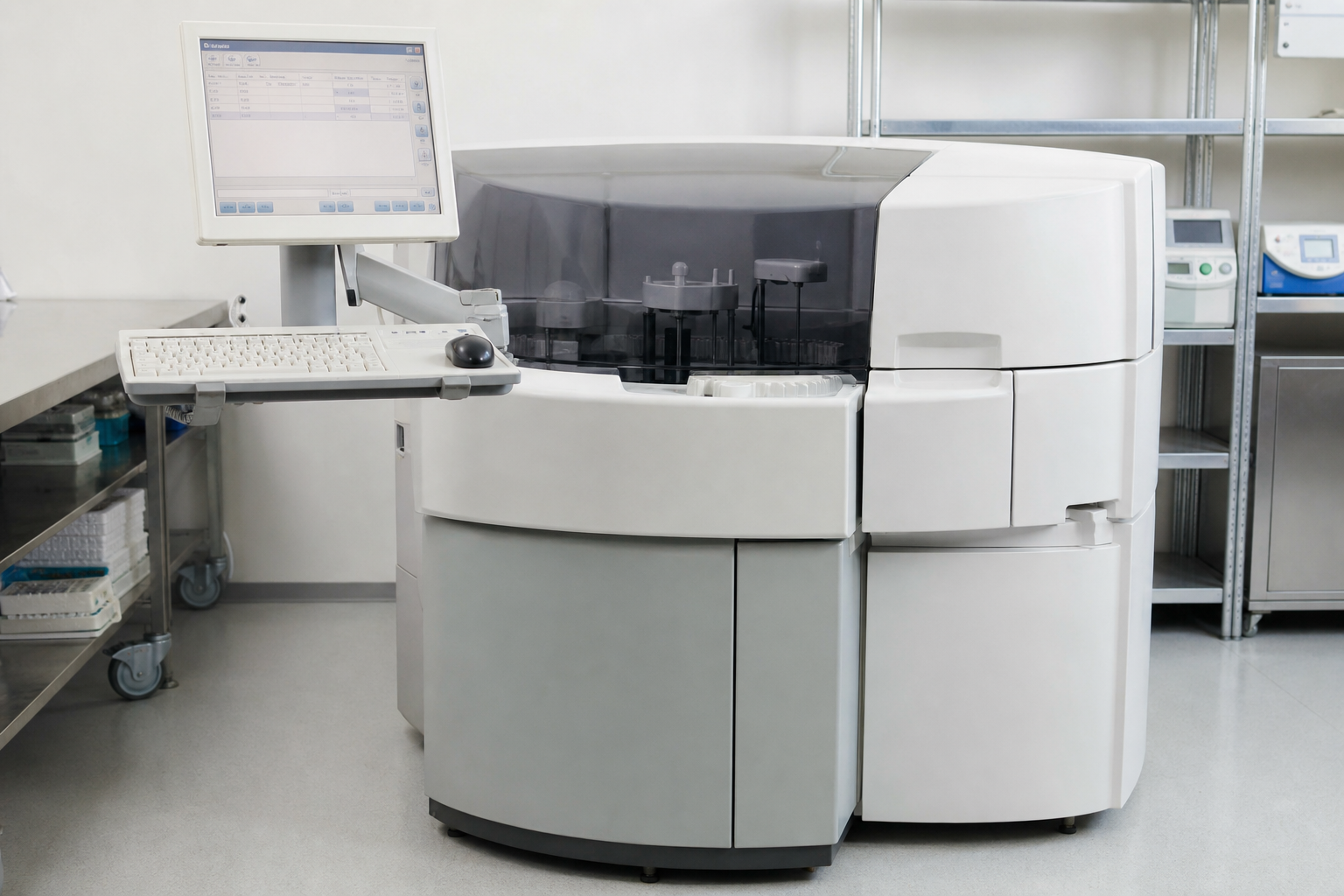
A used chemistry analyzer can reduce your upfront costs, but the purchase price rarely tells the whole story. In most labs, long-term expenses depend on reagent costs, consumables, and access to qualified service engineers. Before comparing models, request a written quote based on your test menu. Confirm who will maintain the analyzer and check your site’s requirements. These details help you assess the instrument’s true value.
What does a used chemistry analyzer really cost once reagents and consumables are counted?
The purchase price of a used chemistry analyzer is easy to compare. However, it may represent only a small part of your total investment. Long-term costs often include reagents, calibrators, controls, sample cups, tubing sets, wash solutions, ISE packs, lamps, probes, water treatment supplies, service visits, and spare parts.
Start with your actual test menu
First, list the tests your laboratory performs and estimate your expected workload. A platform may look attractive until you discover that your routine chemistry, immunoassay, or specialty tests require different reagent formats, minimum order quantities, or distributor channels.
Ask each seller for a written estimate based on your test menu and expected workload. Include the consumables needed for daily operation, shutdown, and restart. Avoid generic cost-per-test claims that do not reflect your laboratory’s needs.
Check reagent availability and long-term supply costs
Also, check whether the analyzer depends on specific reagents or accessories. Some analyzer families rely on particular reagent ecosystems. This does not make one platform better than another, but it makes supply availability an important part of your decision.
If your local distributor network has limited stock, a low purchase price can lead to higher costs over the next five years. Before committing, confirm current prices, delivery times, minimum order quantities, and the availability of alternative suppliers where appropriate.
For distributors buying equipment for resale, the installed base matters too. A larger installed base in your target market can make it easier to find customers for consumables and connect buyers with service partners. In contrast, a platform with limited local presence may be harder to support after the sale.
Compare the full cost of ownership
If you are comparing a used analyzer with a new placement or reagent-rental contract, put both options in the same cost comparison. Include the instrument price, minimum reagent commitments, consumables, preventive maintenance, emergency service visits, training, software or interface fees, deinstallation, packing, and freight.
This approach helps you compare the full financial commitment rather than the price of the machine alone.
You can also explore EMTrading’s used laboratory equipment category and diagnostic equipment category. These categories provide a starting point for evaluating laboratory and diagnostic equipment alongside your analyzer purchase.
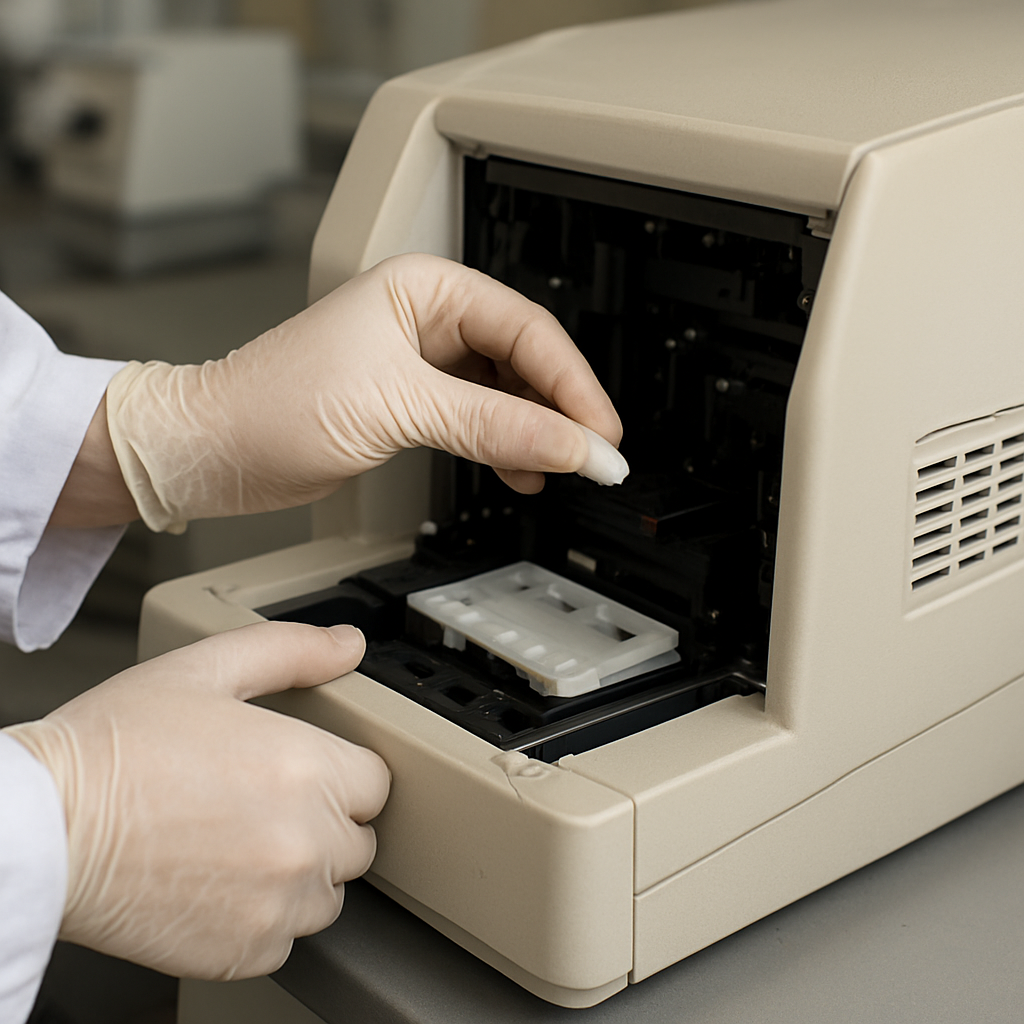
Is the platform still supported, and who can service it where you are?
Check service availability before negotiating the price. A used chemistry analyzer needs qualified technicians who can install, maintain, and repair it at your location. Therefore, ask two key questions: does the platform still have reliable technical support, and who will service your specific unit after delivery?
Check spare parts and technical access
Start by checking whether you can still obtain preventive maintenance kits, common wear parts, and replacement modules. Ask the seller, manufacturer, or an established third-party service provider about availability.
Also, confirm whether your service engineer can access the necessary software, passwords, backup procedures, and interface support. Without the right tools and documentation, even a functioning analyzer can become difficult and expensive to maintain.
Confirm regional service coverage
Next, ask the seller to describe its service coverage in writing. Some providers support Western Europe but cannot serve customers in the Gulf region. Others cover major cities but cannot regularly reach remote hospitals.
If you plan to export the analyzer, clarify who will resolve installation issues at the destination. Establish who pays for travel and additional service visits. Also, agree on who takes responsibility if the unit fails the agreed acceptance checks after delivery.
The installed base in your target market can help you assess the risks. When several laboratories use the same platform, you may find trained engineers and spare parts more easily. If very few local laboratories use it, you may face higher support costs. This is a practical service consideration rather than a judgment on the analyzer itself.
Agree on post-sale support before payment
Before paying, ask the seller to identify the person or company responsible for technical support. This could be the seller’s own team, an authorized regional partner, or an independent field-service company.
If the agreement includes maintenance, define response times, excluded parts, remote support hours, and handover documents. EMTrading’s medical device service support page provides a useful reference for understanding the service arrangements buyers should clarify.
Finally, distinguish the seller’s responsibilities from those of the laboratory. The seller can provide technical documentation and equipment records. However, the purchasing laboratory remains responsible for the verification and validation required for clinical use, along with applicable accreditation requirements.
CLSI’s method evaluation guidance explains key aspects of laboratory method evaluation. Your laboratory should also follow its quality system and applicable equipment management procedures.
What site requirements – water, power, drainage, space, and interfacing – must you check first?
Site preparation can delay even a promising equipment purchase. Before shipment, request the exact preinstallation requirements for the model and configuration you intend to buy. Include all external modules and connected systems. Do not assume that similar analyzer models share identical requirements.
Check water quality and drainage
Water supply is often one of the first requirements to review. Many chemistry analyzers need water of a specified quality, a stable supply, or a dedicated purification system. They may also require suitable waste handling and drainage.
Ask the seller for the manufacturer’s current site-planning or preinstallation document. Review it with your facilities team before shipment. Also, confirm who will provide the purification equipment, plumbing, and drainage connections at your location.
Confirm power and electrical requirements
Next, check the analyzer’s electrical requirements. Confirm the voltage, phase, frequency, plug type, and grounding arrangements. Ask whether the instrument needs an uninterruptible power supply (UPS) or a conditioned electrical supply.
Remember to account for connected modules. An integrated line may have different power requirements from a standalone bench analyzer. Confirm the startup load and any additional electrical needs before preparing the site.
Assess space, access, and installation
Space planning involves more than measuring the instrument’s footprint. Check door widths, elevator limits, bench or floor loading, and the service clearance required around the analyzer. Also, consider ventilation and the space operators need for routine maintenance.
Plan the delivery route before arranging shipment. Confirm whether the quoted price includes disassembly, protective packing, transport, positioning, and reassembly at the destination. These services can significantly affect your total costs.
Plan LIS integration and software access
Discuss laboratory information system (LIS) integration before buying the analyzer. Ask which middleware, licenses, interface files, or communication protocols the system requires. Then establish who will configure and test the connection.
If the analyzer will initially operate without a live interface, agree on a temporary procedure. Define how staff will manage results, user accounts, and barcode workflows during that period.
Keep the manufacturer’s documentation available
Keep the manufacturer’s site-planning, operating, and maintenance documents with your project records. These documents provide the correct reference for installation and routine procedures.
Always follow the manufacturer’s instructions and your laboratory’s approved procedures for calibration, quality control (QC), and preventive maintenance. Avoid relying on informal advice for technical or quality-related tasks.
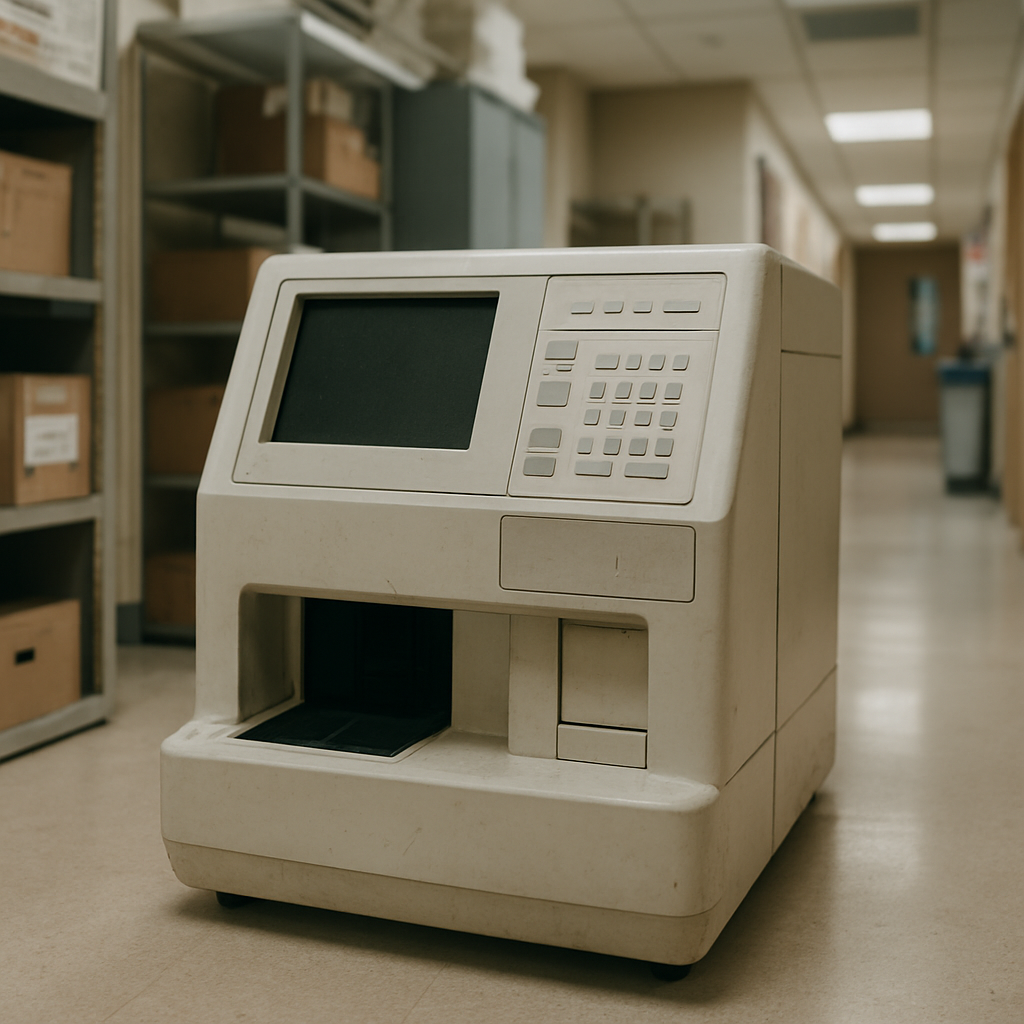
What should you inspect, test, and get in writing before payment?
Before paying, request the analyzer’s serial number, year of manufacture if available, current configuration, installed modules, and software version if the seller can confirm it. Also, ask for a clear list of included accessories. Compare this list with everything you need to operate the analyzer after installation. Missing racks, ISE components, barcode readers, water treatment kits, or interface equipment can quickly increase your total costs.
Review the service and deinstallation history
Ask the seller for the available service records and details about the analyzer’s previous installation. Find out where the equipment operated, when the previous owner removed it from service, and how the seller stored it.
Request a list of completed repairs and replaced parts. If the seller only powered on the analyzer, ask what that test actually confirmed. A successful power-on does not prove analytical performance or clinical suitability.
Agree on inspection and testing criteria
Define the inspection process before transferring funds. Depending on the model and the seller’s capabilities, the checks may include:
-
Visual inspection of the analyzer and its accessories
-
Confirmation that the instrument powers on
-
Verification that the system recognizes installed modules
-
Basic mechanical movement checks
-
Leak checks where relevant
-
A documented demonstration of agreed functions
Keep the inspection results factual. A general workshop check does not prove assay performance or suitability for clinical use. If you require additional testing, agree on the procedures and acceptance criteria before purchase.
Put the commercial terms in writing
Your purchase agreement should clearly state what the seller will supply and what the price excludes. Specify when shipping risks transfer, what warranty applies, and who handles installation and training.
Also, clarify who will manage freight damage claims. Agree on the next steps if the delivered equipment differs from the quotation or fails the agreed acceptance checks.
If the seller includes reagents or consumables, list the exact products and quantities. Record their storage requirements and expiry dates. Also, define any applicable conditions for handling or replacement.
Follow a structured purchasing process
A staged process helps you identify problems before they become expensive. Review the equipment documents first, then confirm site readiness and technical details. Finalize the contract before shipment, and agree on installation and local acceptance procedures in advance.
This approach helps both parties understand their responsibilities. It also reduces the risk of unexpected costs after delivery.
Ultimately, buy the support and supply chain as carefully as the instrument itself. A used chemistry analyzer can offer good value when reagent costs are clear, service access is reliable, site preparation is documented, and the seller’s obligations are in writing. If these points remain unclear, the low purchase price may not represent a good deal.

Ratings and Reviews