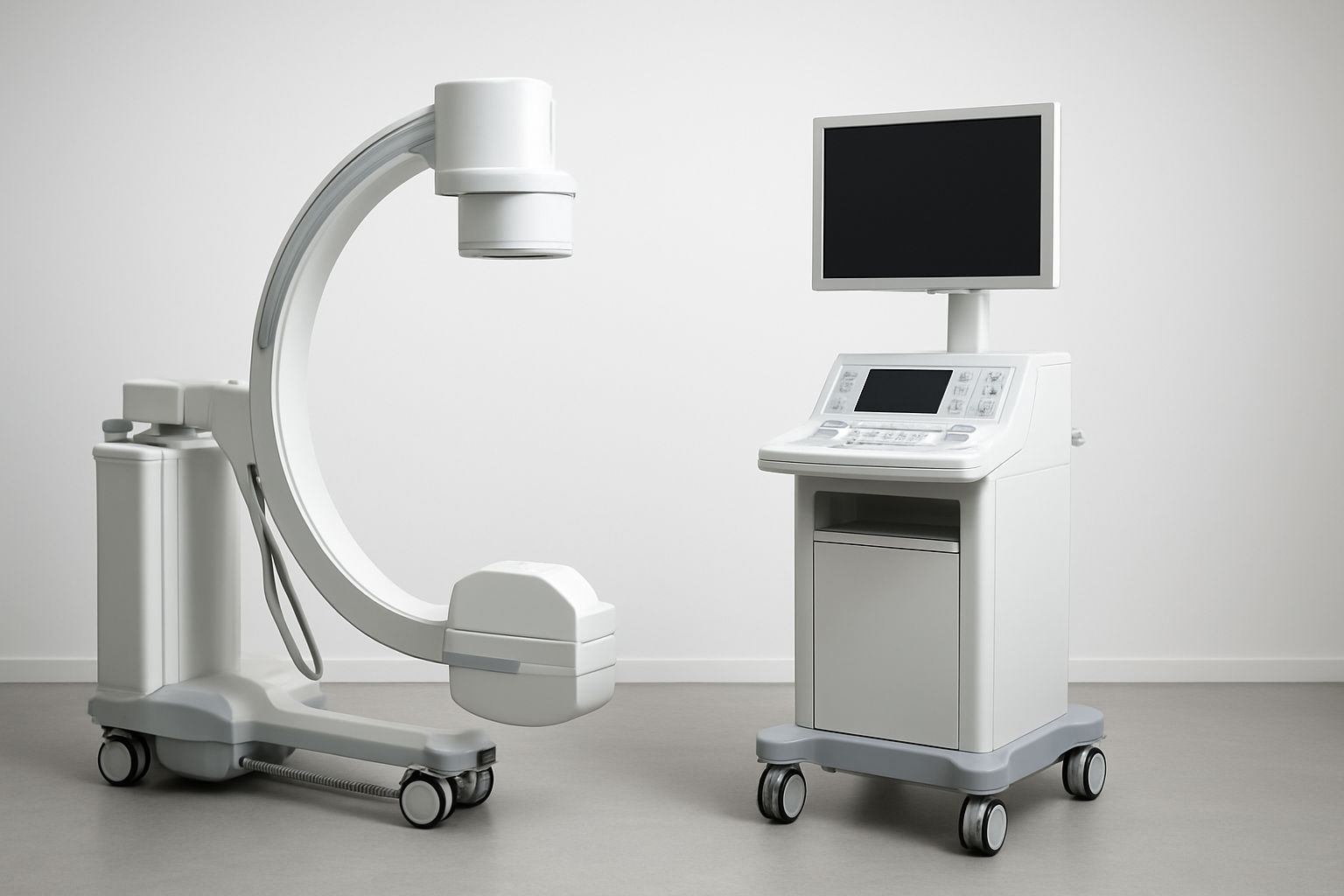
If you need to sell used medical equipment, the fastest way to get a serious offer is to prepare the asset properly before you approach a dealer. In practice, value usually depends on five basics: exact model, age, working condition, included accessories, and service history. A clear equipment file, good photos, and a realistic route to collection will do more for your outcome than a rough verbal description. If you are deciding between scrapping, trade-in, or resale, the key question is simple: is the device complete enough, identifiable enough, and marketable enough to justify the effort.
What is your used medical equipment actually worth, and what drives that number?
When a hospital or practice wants to sell used medical equipment, valuation starts with identification. A dealer needs the manufacturer, model name, serial number, and if available, year of manufacture. Without that, any offer is only provisional.
From there, the main value drivers are straightforward.
- Working condition. Is the unit powering on. Are core functions responding. Has it been in routine use, in storage, or removed because of a fault.
- Completeness. A system with its original probes, transducers, modules, footswitches, carts, cables, or power supplies is usually easier to place than an incomplete base unit.
- Service history. Records of maintenance, repairs, parts replacement, or decommissioning notes help a buyer understand risk and planning.
- Cosmetic condition. Cracked housings, broken wheels, missing covers, heavy discoloration, and damaged screens can reduce interest even if the unit still operates.
- Market demand. Some categories move consistently because buyers look for replacement systems, backup units, or spare parts. EMTrading’s used medical equipment shop shows the wide range of categories commonly traded, from imaging and monitoring to endoscopy, OR equipment, spare parts, and accessories. citeturn0search2turn0search4
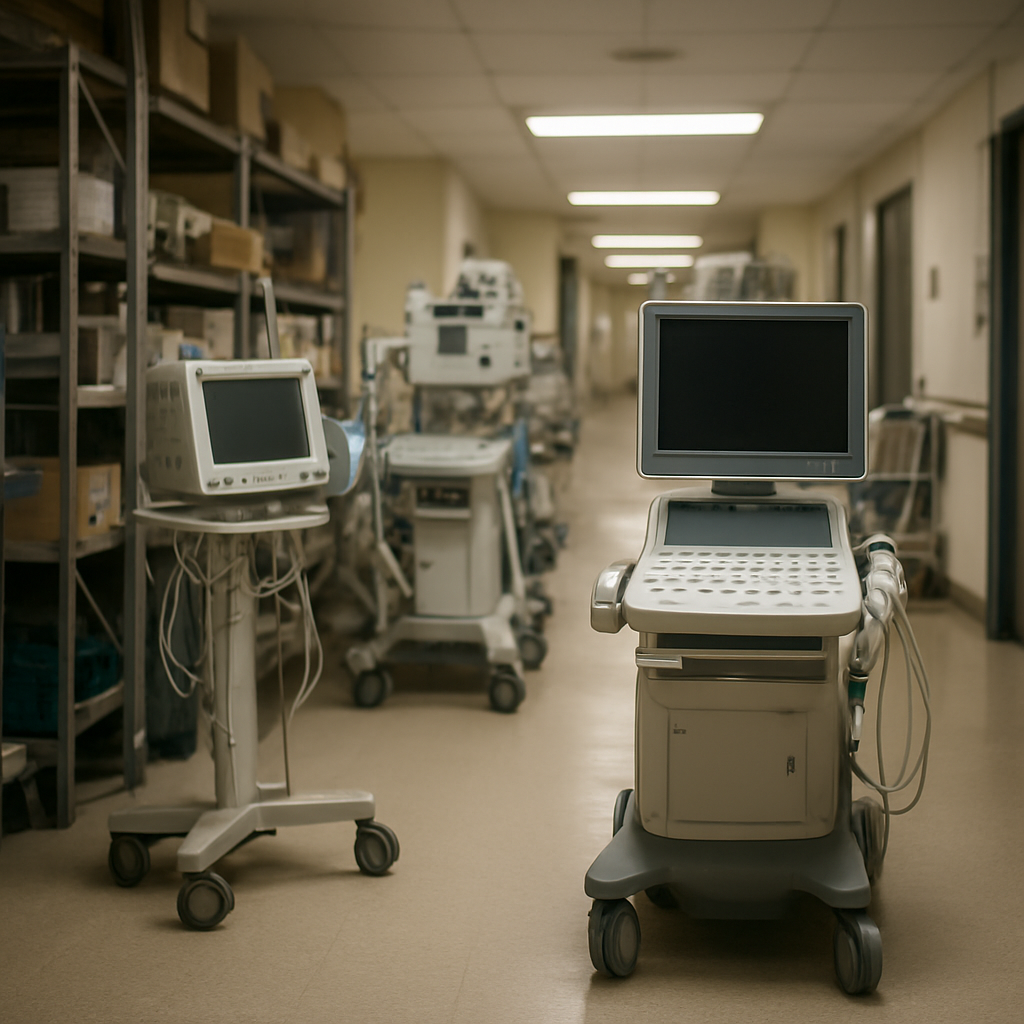
Accessories matter more than many sellers expect. A used ultrasound with the right probes and trolley is a different proposition from a console parked in a corridor with no matching peripherals. The same applies to endoscopy stacks, monitors, anesthesia units, and patient monitoring systems. Missing accessories do not always make a unit unsellable, but they often change who can buy it and how quickly it can move.
Service history also helps separate scrap from resale candidates. You do not need perfect records. However, any documentation that shows how the device was maintained, when it was last used, and whether there are known faults makes assessment easier.
It also helps to think in disposal routes, not just in price. Some units have resale value as complete systems. Some have value mainly as parts donors. Some may not justify transport at all. That is why a dealer will usually assess both condition and commercial viability before making an offer.
What should you gather and photograph before asking for an offer?
Before you contact anyone, build a simple handover file. This saves time and reduces back-and-forth.
At minimum, gather:
- manufacturer and model
- serial number
- year of manufacture, if known
- your site location
- whether the unit powers on and what you have tested
- known faults or missing parts
- list of included accessories
- service or maintenance records, if available
- deinstallation status, for example still installed or already removed
- quantity, if you are selling more than one unit
Then take photos that answer a buyer’s first questions without another email.
- Front view and side views. Show the full unit and its physical condition.
- Rear panel. Ports, connectors, and labels matter.
- Model plate and serial label. Make them legible.
- Screen powered on. If the unit boots, photograph that.
- Accessories laid out clearly. Include probes, cables, modules, pedals, holders, batteries, chargers, carts, and manuals if present.
- Any damage. Photograph cracks, worn keypads, broken casters, corrosion, or missing panels directly.
If the item is an ultrasound, list each probe by model. If it is an endoscopy tower, list every major component in the stack. If it is a monitor or anesthesia setup, note modules and accessories individually. Specificity improves assessment.
Keep your description factual. Avoid broad statements like “fully functional” unless your team has actually checked the relevant functions. A better note is “powers on, touchscreen responds, removed from service during replacement project, one probe included, service records available from 2023 to 2025.”
Before release, confirm internal sign-off with your own compliance, asset management, and hygiene teams. This post is about preparing the sale process, not replacing your internal disposal procedure.
If you want a simple route, EMTrading’s medical equipment selling service is structured in four steps: contact, assessment, offer and agreement, and collection. Providing the file above at first contact makes that assessment stage much easier. citeturn0search0
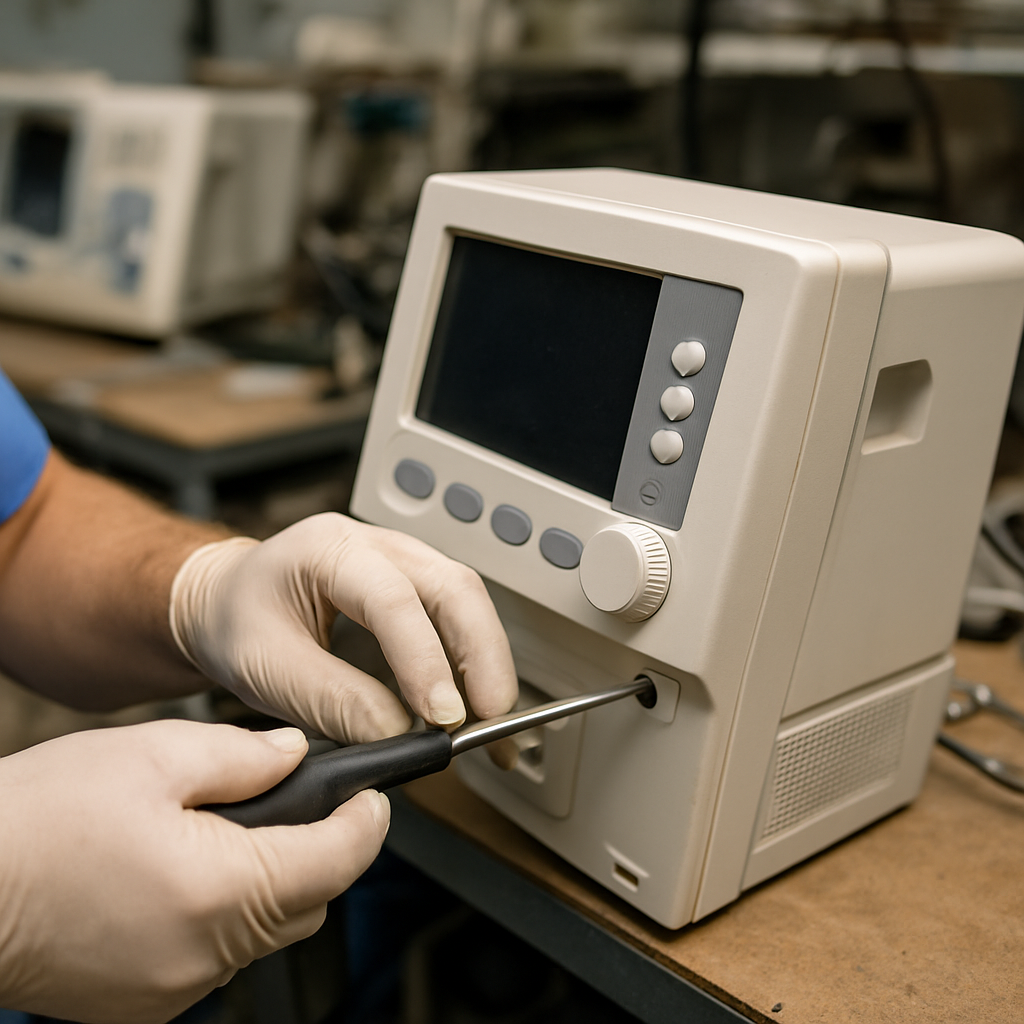
Should you sell to a dealer, trade in, or list it yourself?
Each route has a place. The right one depends on how much time your team can spend, how complete the equipment is, and how quickly the space needs to be cleared.
Selling to a dealer is usually the most practical route when you want one counterparty to assess the unit, make an offer if suitable, and arrange collection. This works well for hospitals clearing corridors, project rooms, or storage areas where speed and certainty matter more than trying to maximize every last euro. It also suits mixed lots, older systems, or equipment with incomplete documentation.
Trade-in can make sense if you are already replacing equipment through a supplier and want the outgoing asset tied to the incoming purchase. The convenience is obvious. The downside is that the trade-in value may not always reflect the broader secondary market, and it is often tied to the purchasing negotiation rather than treated as a separate resale exercise.
Listing it yourself may produce interest if the item is easy to identify, easy to ship, and attractive to a broad buyer pool. However, it creates more work. Your team has to write the listing, answer technical questions, sort serious buyers from casual enquiries, manage documentation requests, and coordinate collection. For a busy biomedical or procurement team, that effort is often underestimated.
A useful rule is this:
- Choose dealer sale when you want a defined process and one point of contact.
- Choose trade-in when replacement procurement is already in motion and simplicity matters.
- Choose self-listing only when your team has time, the equipment is easy to present, and you are comfortable managing the transaction directly.
If you are replacing several assets at once, it may also help to discuss both disposal and sourcing in one conversation. EMTrading’s medical equipment purchase service is aimed at facilities planning equipment changes and can support a more coordinated approach across outgoing and incoming stock. citeturn0search8
How does collection, transport and payment usually work?
Most sellers want clarity on sequence. While each transaction depends on the asset and agreement, the usual flow is simple.
First, you make contact and share the equipment details. Next comes assessment. That is where the dealer reviews the model, condition, accessories, and commercial suitability. If the equipment is of interest, the next step is offer and agreement. After that comes collection. EMTrading presents its process in exactly those four steps on its selling service page. citeturn0search0
Collection planning usually depends on practical details that sellers can prepare in advance:
- ground floor or upper floor access
- lift dimensions if the unit is inside the building
- whether the unit is already disconnected
- collection window and site contact person
- packing status and whether accessories are boxed separately
- whether there are multiple items on the same site
This is where surprises tend to slow a transaction. A large imaging or theater device is different from a boxed monitor. If a unit needs special handling, say so early. If accessories are stored elsewhere, label them clearly so they leave with the main unit.
Payment terms are part of the agreement stage, so they should be confirmed in writing before collection. Do not assume that every buyer follows the same sequence. Instead, ask for a clear written summary of what is being collected, what is included, and how the payment step is triggered.
Internally, it helps to appoint one owner for the sale. That person should coordinate biomedical engineering, procurement, finance, and the site team. Even a small disposal project moves faster when one person controls the photo file, accessory list, contact details, and collection access instructions.
The practical lesson is simple. If you want to sell used medical equipment without wasting staff time, prepare the equipment file first, choose the disposal route second, and confirm collection logistics before the unit is touched. Most delays come from missing model data, scattered accessories, and unclear handover responsibility, not from the valuation itself.
Summary: To sell used medical equipment successfully, identify the unit accurately, document condition honestly, list every accessory, and photograph labels and powered-on screens. Then choose the route that fits your team’s time and the asset’s complexity. A dealer process is often the simplest when you need assessment, offer, agreement, and collection handled in one sequence.
Ratings and Reviews