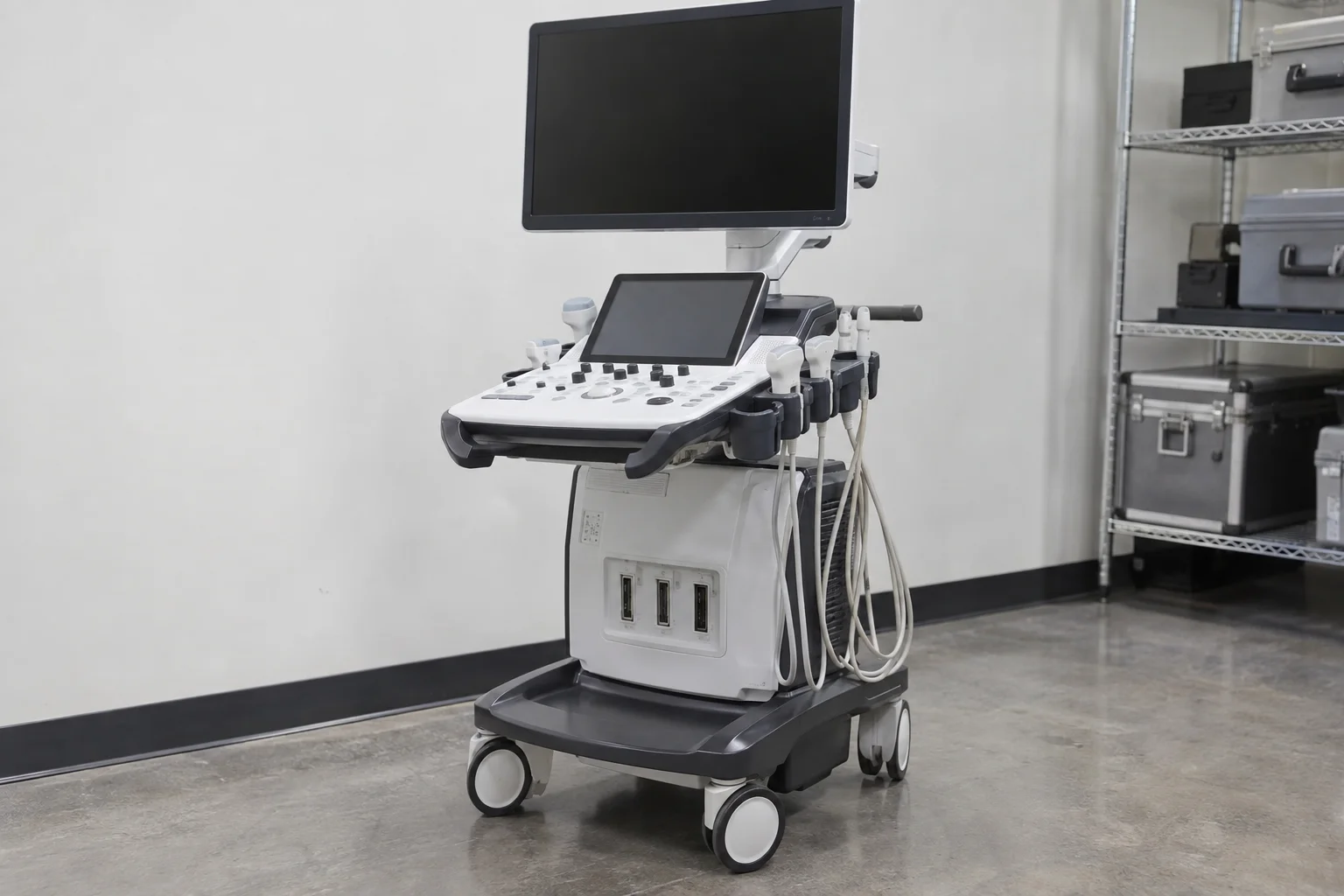
Treat used medical equipment documentation as part of the deliverable, not as an afterthought. Before you accept delivery, agree a handover pack that identifies the exact device, records what the supplier has done and lists the manuals, accessories and part references your team will need next. That pack will not prove future performance, and it does not replace your own acceptance testing or clinical commissioning. However, it can prevent avoidable delays, wrong-part orders and expensive first service visits.
Which documents should a supplier hand over with a used device?
Documents that identify the unit
Start with documents that tie the paperwork to the exact unit you bought. The manufacturer, model, serial number and, where relevant, the software version should match the labels on the device and the sales documents. If the device has configurable options, the pack should list them as well. Without that basic identification, the rest of the pack is much less useful.
Next, request the operating documents your receiving team will actually use. In practice, that usually means the user instructions, any available technical or service manual, and any installation or setup notes the supplier may pass on. A list of important spares and accessories with part numbers belongs in the same set, because your service team will need it first.
The supplier’s own handover records
Then ask for the supplier’s own handover records. Keep them simple and specific. A good handover note lists the device identity, the shipping date, the accessories included and any work the supplier carried out before dispatch. A standard field service report is a useful model: device identity, reason for service, work performed, test equipment used, technician details and parts replaced.
Add the commercial documents to the same file set: invoice, packing list and warranty certificate. That way procurement and biomedical engineering work from one pack. Keep the warranty discussion separate, though, because the handover is about document control, not warranty terms. For those terms, see our guide to the refurbished medical equipment warranty.
Finally, store the used medical equipment documentation where service and procurement staff can both find it. If you are still comparing options, many teams also cross-check future support needs against available used medical equipment, related spare parts and accessories and the supplier’s repair and maintenance service before they sign off the handover terms.
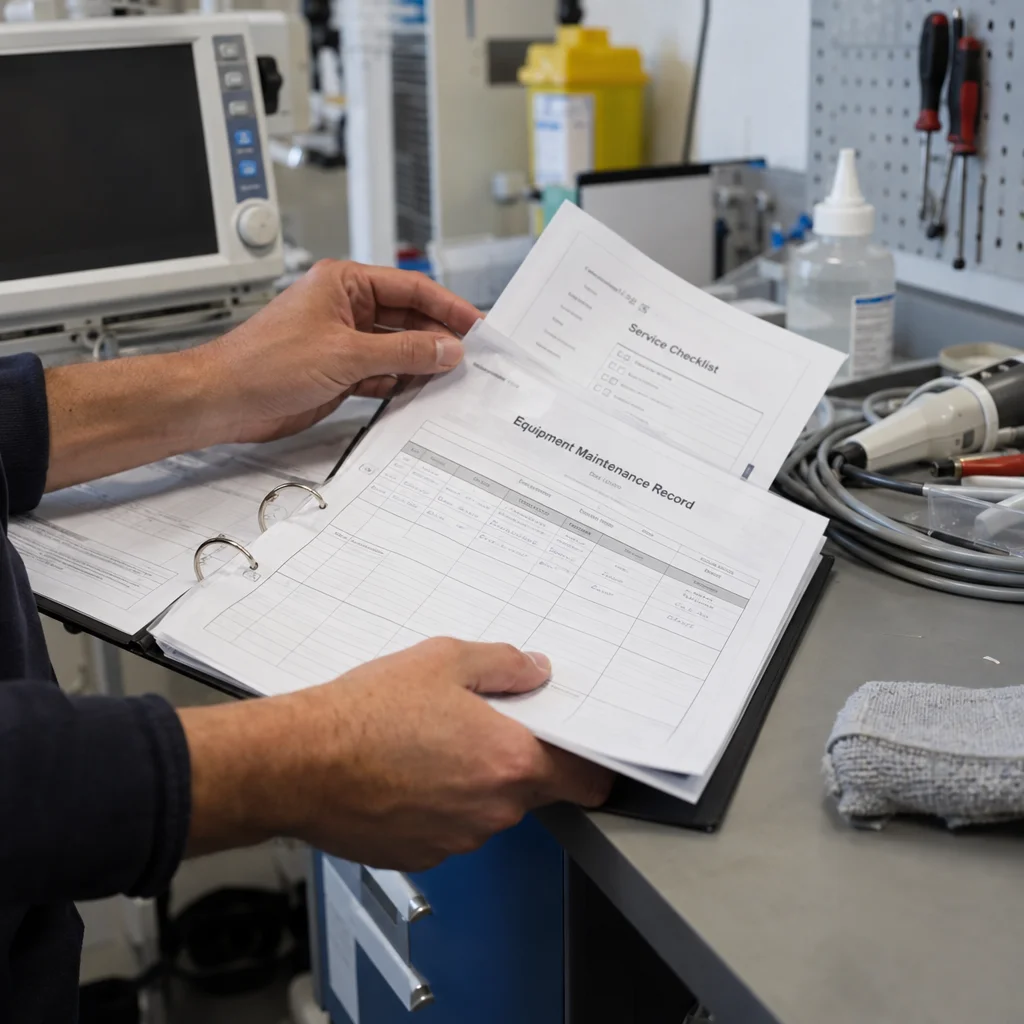
What can a service history tell you about a device’s past use?
A service history shows what someone recorded. It cannot tell you everything that happened to the device. That distinction matters.
Detailed records may show recurring part replacements, earlier fault descriptions, dates of preventive maintenance and notes about configuration changes. That helps your in-house team plan next steps. It can also show whether the supplier serviced the unit recently and which parts they changed. In other words, a service history helps with planning, but it does not prove future reliability.
Thin records do not automatically mean the device is defective. Used equipment often changes hands with partial files. A hospital may keep some records internally, a third-party service company may hold others, and older devices may only have paper records. So if the history is incomplete, treat that as a negotiating point and a planning issue rather than a verdict on the device. If you are on the selling side, our guide on how to sell used medical equipment shows which records to prepare.
Keep the sources apart
Ask the supplier to separate three things clearly: original manufacturer documents, site service reports and the supplier’s own refurbishment or inspection records. These sources do not mean the same thing. A manufacturer manual explains the product. A field report explains a visit. A supplier checklist explains what that supplier says it did before shipment. Condition labels follow the same logic, as our article on refurbished vs used medical equipment explains.
Also, do not over-read a clean history. No record of a fault is not evidence that no fault occurred. Equally, a list of past repairs does not show how intensely staff used the device between those events. Your team should therefore still complete its own acceptance testing, calibration where applicable and clinical commissioning under local procedures, whatever the used medical equipment documentation contains.
Which accessory and consumable references belong in the handover pack?
This is where many first service calls become expensive. The device arrives, but the receiving team still lacks the exact references for probes, cables, sensors, holders, adapters, batteries, filters or other routine items. Service then stalls while staff work out which accessory belongs to which configuration.
The handover pack should therefore list every accessory included in the sale, with a description and, where available, a part reference. If a device ships with optional items, note which options the unit actually has. If an accessory has its own serial number, record that too.
Consumables matter as well. The supplier should name the consumables and replaceable items your team needs for setup, routine checks or normal operation, again by reference where available. However, do not assume cross-model compatibility from appearance alone. Confirm the part reference against the manufacturer’s compatibility list for that exact model and software version.
What a useful reference list contains
That point matters even more for systems with software-dependent accessories or configurable modules. If a part or accessory choice affects setup or servicing, get the reference into the handover pack before shipment. A useful list usually includes:
- main device model and serial number
- software version where relevant
- all included accessories with part numbers or supplier references
- any missing but required accessories that are not part of the sale
- routine consumables or replaceable items needed for setup or operation
- battery or power-related items where applicable
- recommended source for future parts matching
If the supplier cannot provide manufacturer part numbers for every item, ask for clear photos and the supplier’s own stock references. That is less precise, but it still beats an unlabelled box of accessories with no list. To check whether those parts are still supplied, see our guide on medical equipment spare parts availability.
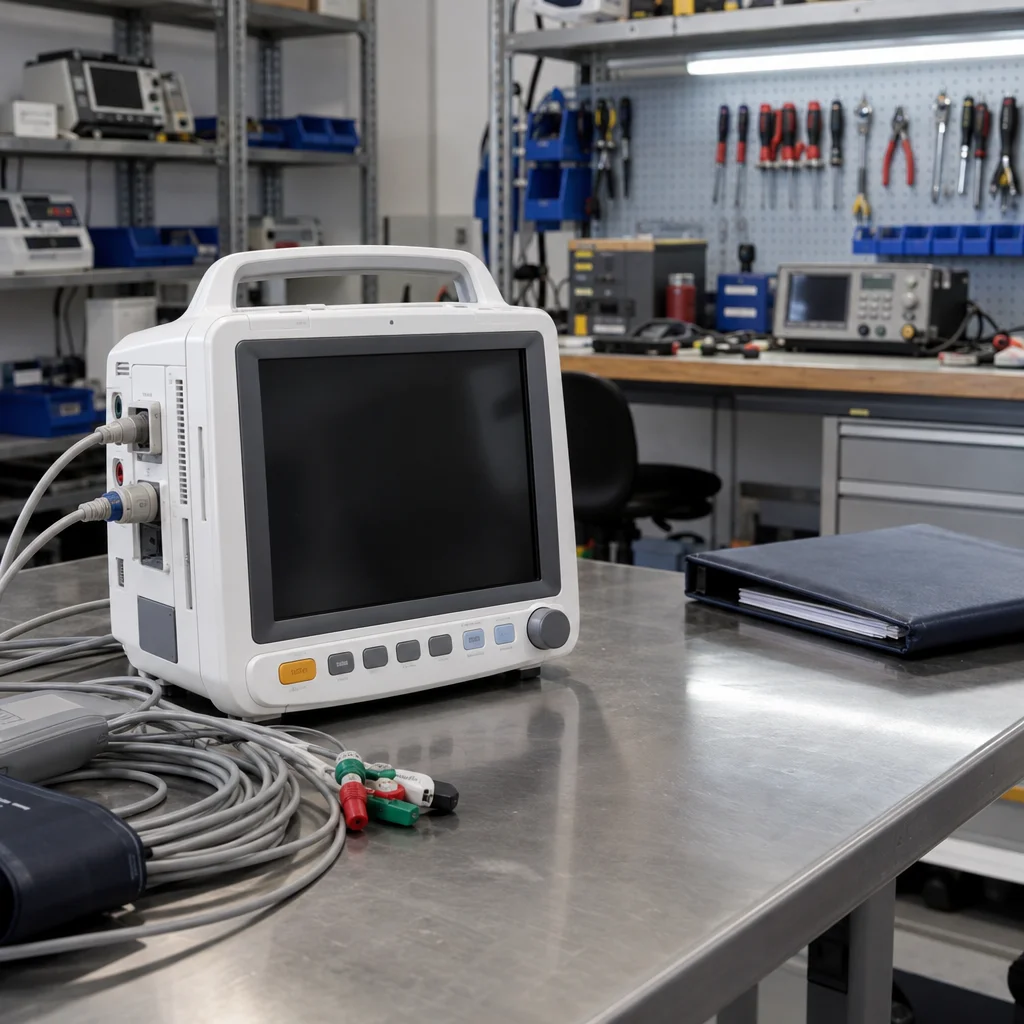
What should you do when the documentation is incomplete or missing?
First, document any gap in the used medical equipment documentation before dispatch. Do not wait for the truck to arrive. List each missing item in the order file or handover checklist, assign an owner, and agree whether it must arrive before shipment or can follow by a fixed date. That keeps the issue commercial and manageable.
Second, decide which missing documents are critical for acceptance and which are not. A missing serial-specific handover checklist may be tolerable if the unit identity is clear and your team can complete incoming inspection. Missing operating instructions or unclear accessory references usually cause more disruption, because they slow setup and service planning immediately.
Third, build a replacement pack where the original records are thin. That can include a fresh incoming asset record, photos of labels and connectors, a list of received accessories, and your own acceptance and calibration records. In addition, note any gaps you could not close, such as an unknown software version or unconfirmed accessory references. A clean internal record from day one is often the best way to reduce future confusion.
If the supplier’s records are thin, ask for a plain written statement of what the supplier did and did not check. That is often more useful than vague assurances. For example, a brief note that lists parts replaced, cleaning or inspection steps completed and documents not available gives your biomedical team a clear starting point.
Keep expectations realistic. Documentation supports traceability and service planning, but on its own it does not confirm compliance, suitability for your intended use or readiness for patient service.
Practical summary
Treat used medical equipment documentation as its own deliverable. Ask for unit identification, operating and service documents, supplier handover records and accessory references before shipment. If the file is incomplete, record the gaps and plan around them. That approach will not prevent every service issue, but it usually makes the first one faster, cheaper and easier to manage.
Buying a used device from EMTrading? Ask us which documents are available for that unit before you order.

Ratings and Reviews