
Refurbished vs used medical equipment does not follow a fixed technical standard. In practice, each seller chooses its own labels, such as working, tested, reconditioned, refurbished or as-is, as commercial descriptions. Two devices advertised at the same grade can therefore reflect very different levels of inspection, parts replacement and documentation. Buyers who compare several listings at once do better when they translate every label into the same short set of questions about what the seller checked, what it replaced and what records it will supply. That method stays useful across categories, dealers and budgets.
What do working, tested and as-is actually tell you about a device?
Usually, these labels tell you less than buyers expect. They may describe a sales condition, not a standardised technical process. In other words, none of these three labels has a regulated definition on its own. Sellers can use them differently, and no automatic certification, CE status, MDR class or ISO status attaches to the label itself.
An as-is offer usually means the seller sells the unit in its present condition and promises little or nothing about preparation beyond what the listing states. Tested usually means some form of inspection or function check took place. However, the depth of that test may range from powering the unit on to running selected functions with accessories attached. Working often signals that the device performed its basic intended operation when the seller evaluated it. Still, the word does not tell you which functions the seller checked, under what conditions, or whether anyone replaced wear parts.
That is why procurement teams should treat condition words as shorthand, not proof. If you review stock in a dealer’s used medical equipment shop or compare options across a broader medical equipment catalog, hold every listing to the same evidence standard. Ask for the actual scope of work and the paperwork behind it. Because the wording varies from seller to seller, the record matters more than the label.

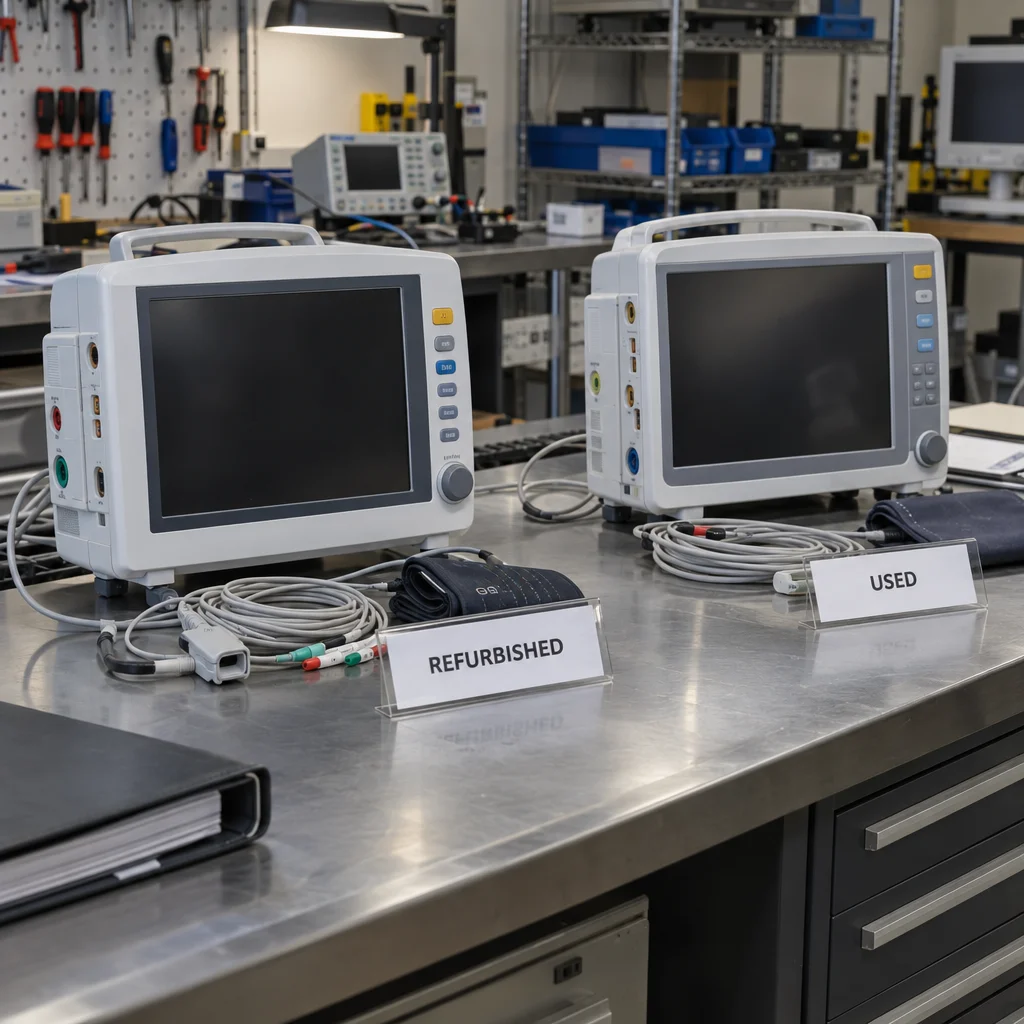
How does refurbishment differ from a clean and a basic function check?
Refurbishment should mean more than cleaning and confirming that the device powers up. Yet the exact scope still depends on the seller unless the seller puts that scope in writing. Some dealers use refurbished for a structured process that includes cosmetic preparation, inspection, replacement of worn components, functional checks and final documentation. Others use the same word for a lighter process with cleaning, minor repairs and a short verification test.
A clean and a basic function check are narrower. They may improve presentation and confirm that key controls respond. Even so, they do not automatically show what happened inside the device, which assemblies the technician inspected, whether anyone changed consumable or wear items, or whether someone reviewed software and accessories for that exact configuration.
Why the work performed matters more than the name
This distinction matters because the wider medical-device field describes service work by the activity itself. The U.S. FDA distinguishes servicing from remanufacturing based on the work a company performs, not on the name it gives that work. The agency also notes that refurbishing, reconditioning and related terms can sit under servicing in some contexts. Remanufacturing, by contrast, means work that significantly changes performance, safety specifications or intended use, and it has different regulatory implications. That is another reason not to read too much into a sales label alone. Buyers need the actual work scope, not just the marketing term. FDA guidance on servicing and remanufacturing medical devices gives useful background on why activity descriptions matter.
For a dealer, a meaningful refurbishment record might include incoming inspection notes, parts replaced by reference, cleaning steps, fault rectification, functional verification and final sign-off. It may also include service options after delivery, for example through a provider offering medical device repair and service. Still, acceptance testing, calibration where required and clinical commissioning remain the buying facility’s own responsibility before the device enters service.
Which questions turn a condition label into verifiable information?
You do not need a long checklist. You need a short, repeatable set of condition questions that every seller must answer in writing. First, ask what the seller inspected. The answer should cover the assemblies, modules or functions it reviewed, not just a general statement that someone checked the unit.
- What exactly did the seller inspect? Ask for the subsystems, modules or functions it reviewed during intake and before dispatch.
- What exactly did the seller test? Ask which functions it verified, with which accessories, and whether the test covered all functions, some functions or only power-on.
- What did the seller repair or replace? Ask for replaced parts by reference where possible, and whether each replacement part is new or comes from another device.
- What does the grade leave out? Ask which modules, accessories, probes, batteries, sensors, cables or software options fall outside the stated grade.
- What records are available? Ask for service reports, test records, photographs, serial numbers and configuration details.
- Who performed the work? Ask whether in-house technicians, an external service partner or the original manufacturer performed the work.
- What remains for the buyer? Ask what installation checks, calibration, acceptance testing or commissioning your facility must complete after delivery.
These questions do two jobs. First, they expose thin listings quickly. Second, they make unlike listings easier to compare because each seller has to describe scope, exclusions and evidence in the same structure.
Keep the questions narrow and ask about gaps
Keep the questions narrow. Do not drift into a general procurement questionnaire. For this topic, you are only trying to verify condition language and refurbishment scope. For example, if a seller says the offer includes a probe, monitor or imaging accessory, confirm the part reference against the manufacturer’s compatibility list for that exact model and software version. That is a factual configuration check, not a claim about cross-brand compatibility.
Finally, ask for gaps as directly as you ask for completed work. If a dealer cannot state whether it inspected or replaced batteries, seals, lamps, filters, fans, cables or other wear items, note that as unknown scope. Unknown scope is not automatically a problem. However, it should change how you compare offers.
How should the grade you choose change what you budget and plan for?
The right grade depends less on the label and more on your tolerance for downtime, internal technical capacity and documentation needs. A lightly tested or as-is unit may suit buyers who have in-house engineering support, access to parts and time to complete more work after delivery. By contrast, a refurbished unit with full documentation may fit buyers who need a clearer handover record and a shorter path to site acceptance.
Budget planning should therefore follow scope, not vocabulary. If the listing shows limited inspection, limited records or unclear parts replacement, leave room for incoming evaluation, missing accessories, cosmetic work, wear items and a longer hold before use. Meanwhile, if a seller provides a defined refurbishment scope and supporting records, you can plan with fewer unknowns. That still does not remove your own responsibilities for acceptance testing, calibration where applicable and clinical commissioning.
Separate the grade, the work done and the work left
It also helps to separate three things in your internal comparison sheet: sales grade, documented work completed and buyer work still required. Once you split those fields, weak condition language becomes much easier to spot. A device sold as working can still suit you if the seller’s records show the work clearly and the rest fits your team. On the other hand, a device sold as refurbished may still carry hidden effort if the seller cannot show what that refurbishment included.
In short, the practical question is not which label sounds better or which one always costs more to own. The practical question is how much uncertainty remains after the seller explains the scope. Lower uncertainty usually makes planning easier. Higher uncertainty can still be manageable, but only if your team budgets for it openly.
Practical summary
Condition labels in used-equipment listings are seller vocabulary, not universal grades. Therefore, do not buy the word alone. Translate every label into the same written questions: what the seller inspected, tested, replaced and left out, and which records it will supply. Then compare listings on documented scope and buyer follow-up work, not on the headline term. That approach gives procurement teams a clearer basis for shortlisting devices without turning every listing into a guessing exercise.

Ratings and Reviews