
Anesthesia machines play a central role in healthcare: they deliver anesthesia and support the patient’s breathing during surgeries and medical procedures. This article explains the different types, their uses, and how they work.
What Are Anesthesia Machines?
Anesthesia machines are devices that deliver controlled amounts of anesthetic gases to patients, keeping them unconscious or sedated during surgeries. These machines hold great importance in healthcare because they allow surgeons and medical teams to perform invasive procedures pain-free. They also support and monitor vital functions such as breathing, heart rate, and oxygen levels.
Why Anesthesia Machines Are Essential in Healthcare
Without this equipment, many surgical procedures would become either too risky or extremely painful. These machines not only administer anesthesia but also regulate a patient’s breathing and monitor their physiological condition. Over time, technical developments have made these devices more precise and efficient.
Types of Anesthesia Machines
Several types are available, each suited to different medical needs. Below are some of the most common:
1. Continuous-flow Anesthesia Systems
Hospitals and surgical centers rely on continuous-flow anesthesia machines for long procedures. They provide a steady supply of medical gases, such as oxygen and nitrous oxide, mixed with anesthetic agents. As a result, they suit lengthy surgeries that require uninterrupted sedation.
2. Portable Anesthesia Machines
Portable units offer the advantage of mobility. They suit emergency situations, ambulances, and field hospitals where full-sized equipment may not be practical. Because of their size, they are especially useful in non-traditional healthcare settings.
3. Stand-alone Anesthesia Monitors
While these devices don’t administer anesthesia, they play a crucial role in monitoring the patient’s vital signs. Medical teams use them alongside the anesthesia machine to check dosing and to detect signs of over- or under-sedation.
4. Computer-Controlled Anesthesia Systems
These machines use computerized systems to adjust anesthesia delivery in real time. This allows precise control of anesthesia delivery, which is particularly relevant in complex surgeries.
How Anesthesia Machines Work
Delivering anesthetics to the patient involves several steps:
- Gas Supply: Medical gases, such as oxygen and nitrous oxide, are delivered from tanks to the machine.
- Mixing and Vaporizing: The machine mixes these gases with anesthetic agents. This mixture is then vaporized for the patient to inhale.
- Ventilation: The machine either assists or controls the patient’s breathing, maintaining a steady respiratory rate throughout the surgery.
- Monitoring: The machine continuously monitors the patient’s vital signs, including heart rate, oxygen levels, and blood pressure, so the team can respond to changes during the procedure.
Benefits of Using Advanced Anesthesia Machines
Monitoring and Patient Safety
Modern devices with integrated monitoring systems help the team detect changes early. These systems also allow more precise control over anesthesia levels.
Greater Efficiency for Medical Teams
Since these machines provide real-time data on patient vitals and automate dosage adjustments, healthcare professionals can focus more on the surgery itself. This can make workflows in the operating room smoother.
Versatility for Various Procedures
Anesthesia workstations cover a broad range of medical needs, from short outpatient surgeries to complex procedures lasting several hours.
Maintenance and Safety Protocols
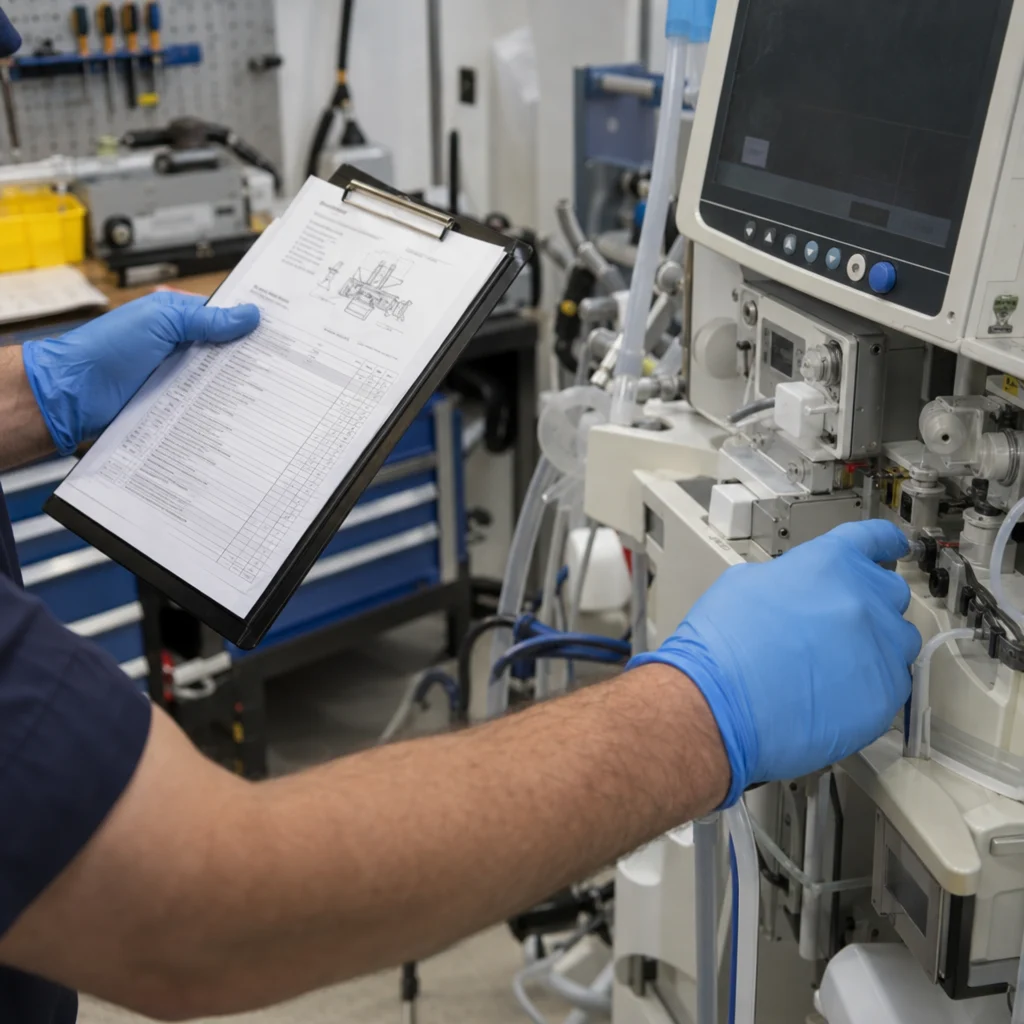
Regular maintenance and strict safety protocols are essential for the reliable operation of anesthesia equipment. Hospitals and clinics perform daily checks, routine calibration, and cleaning to maintain these machines. Proper maintenance reduces the risk of malfunctions, which could have serious consequences for patient safety. For questions about maintenance and repair, our medical equipment repair service can help.
Is an anesthesia machine due for maintenance or showing faults? Send us the model and a short fault description.
Conclusion: The Importance of Anesthesia Machines in Healthcare
Anesthesia machines are a core part of modern healthcare and make pain-free surgical procedures possible. They not only sedate patients but also help monitor vital signs and manage breathing. As technology evolves, manufacturers continue to develop these devices further.
Questions about anesthesia machines or their maintenance?
Ratings and Reviews