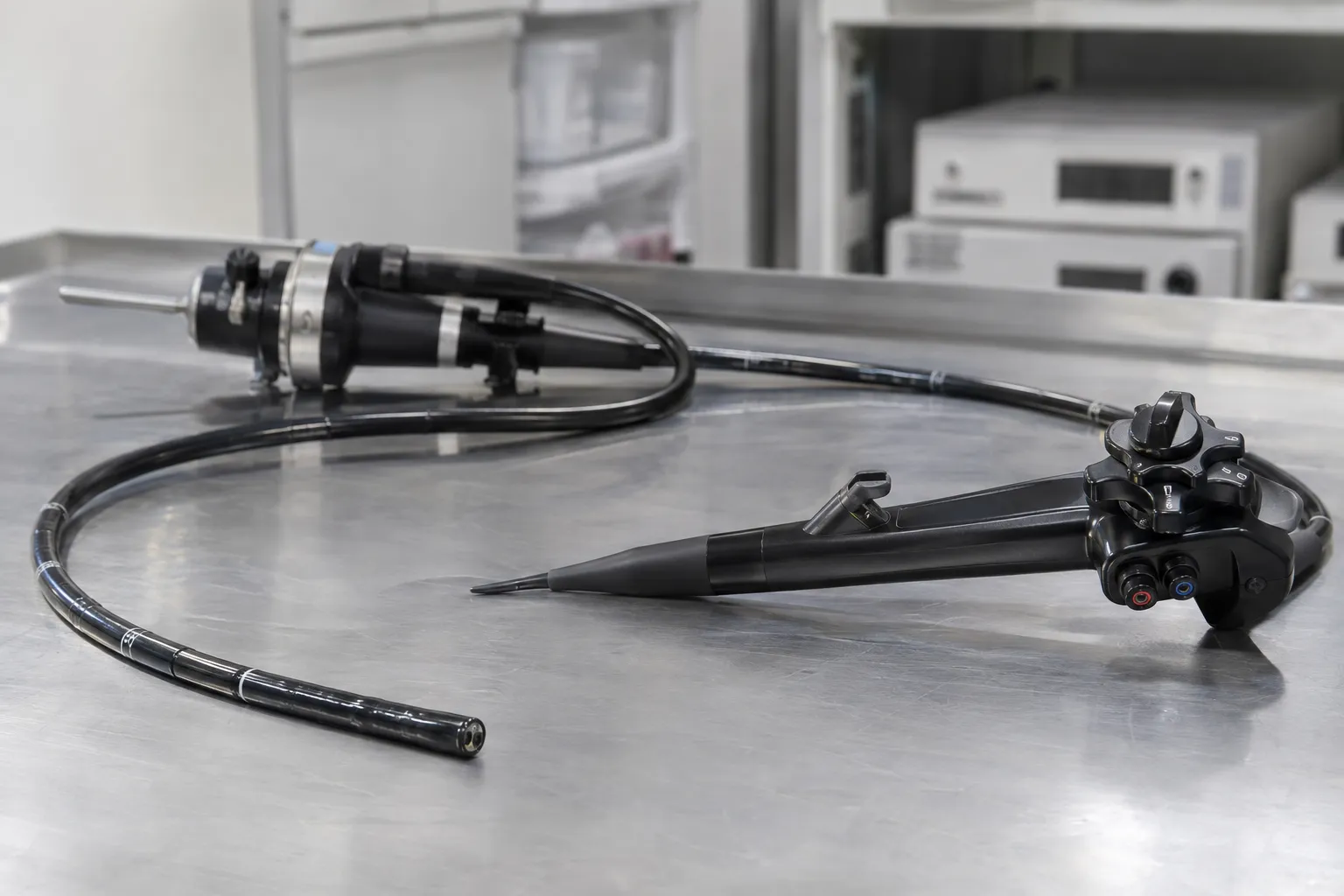
Flexible endoscope repair should not be judged by the first quote alone. In practice, three factors matter most: the exact fault, real parts and service availability for that exact model, and the downtime until the scope is back in use. Therefore, compare repair, refurbished replacement, and in some cases a new purchase in the same decision sheet. That helps you avoid a low initial quote that later becomes harder to approve because of add-on work, long delays, or uncertain parts.
What usually fails on a flexible endoscope?
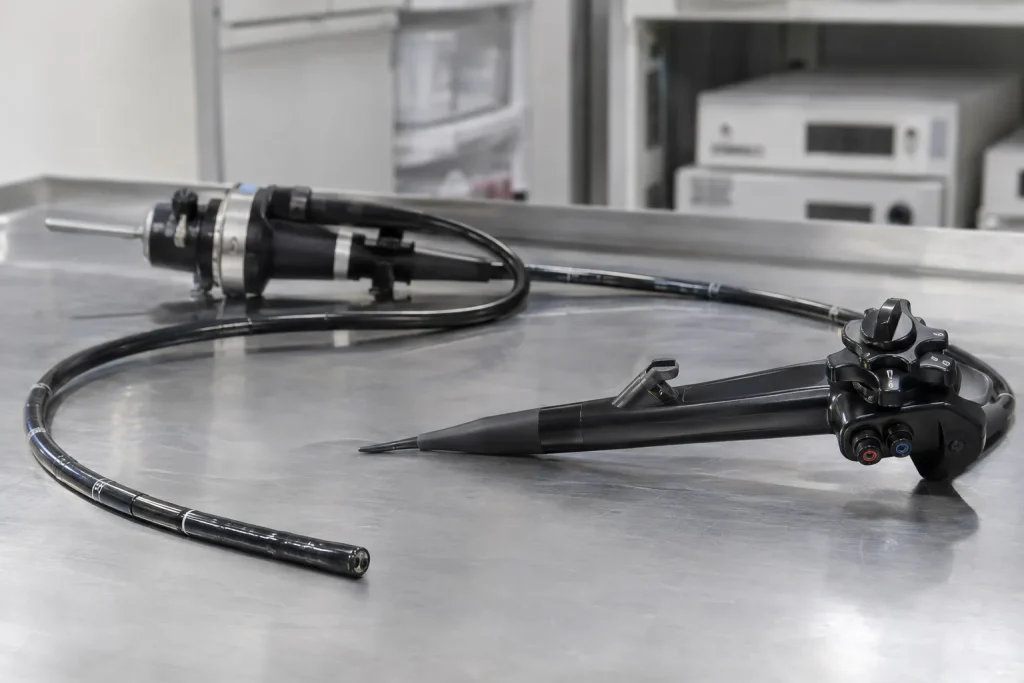
On flexible scopes, faults often affect the components that take the most mechanical stress. These can include the insertion tube, the bending section, angulation wires, distal assemblies, light transmission components, control elements, and overall channel or system integrity. However, the actual fault always needs to be assessed on the individual unit. In addition, manufacturer documents and your own reprocessing records should remain the reference point for model-specific handling and evaluation.
For procurement, the key question is whether the problem is limited or whether several faults appear at the same time. A single, well-defined defect can still be economical to repair. By contrast, the picture changes when the bending section, outer sheath, and internal components are all affected, or when inspection reveals more issues after disassembly. In that case, the parts list grows and the turnaround time often grows with it.
You should also separate older models with limited support from models that still have good service coverage. This point is often underestimated. The visible damage is only part of the decision. Just as important is whether the correct parts, tools, and repair pathway are still available for the exact model designation you own.
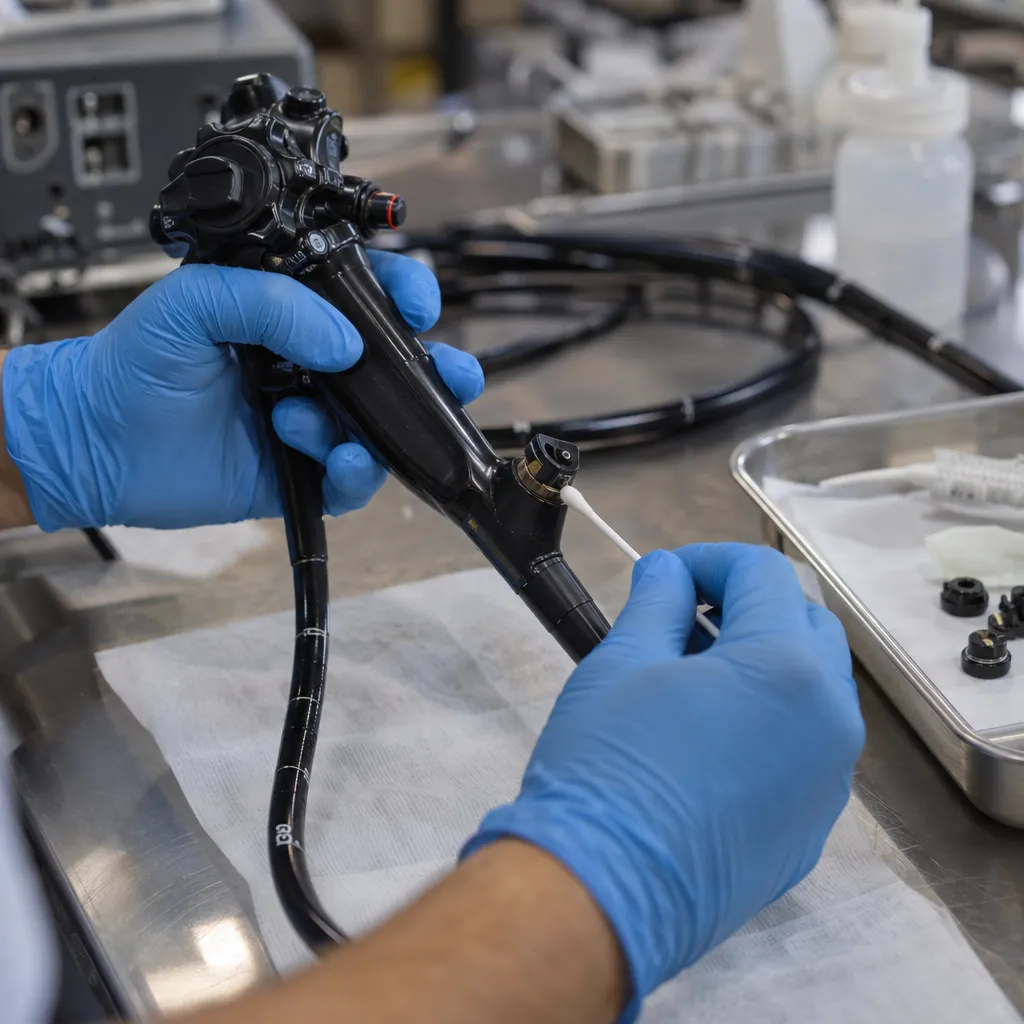
When does repair stop being cheaper than a refurbished replacement?
Repair usually loses its economic advantage not because of the final invoice alone, but because of the full situation around it. It becomes harder to justify when the quote contains many conditional line items, when important parts are only tentatively available, or when the downtime hurts operations more than a faster replacement would. In these cases, it makes sense to request a refurbished alternative from the flexible endoscopy equipment category at the same time.
A refurbished replacement can be the better route when an equivalent model is available quickly and the repair path leaves open what additional defects may appear after teardown. This matters even more if the scope is needed again this quarter and there is no backup in stock. In other words, the decision is often about predictability, not only about the repair figure on page one.
New equipment enters the discussion mainly when neither repair nor replacement can be planned with confidence, or when the facility is moving to another platform by choice. For most urgent installed-base cases, however, the practical comparison is repair versus refurbished replacement. That comparison reflects real availability better than list price alone.
- Repair often makes sense when the fault is clearly limited and the quote is specific.
- Refurbished replacement often makes sense when time is tight and the parts position is uncertain.
- New purchase is usually a strategic decision, not an urgent workshop-bench decision.
How do you check parts and service availability for your exact model?
Always check availability using the manufacturer, exact model name, serial number, and as precise a fault description as you can provide. Do not rely on family names or similar-looking series. With flexible endoscopes, even close variants can differ in assemblies, software status, or accessory interfaces. Therefore, confirm every part reference and compatibility point against the manufacturer’s documentation for that exact model and software version.
For an internal release, a short checklist is usually enough:
- Is the repair provider equipped for this exact model?
- Are the required parts available, substitutable, or only confirmable after inspection?
- Is there a realistic turnaround estimate?
- Will the unit still be repairable if more damage appears after teardown?
- Is a suitable replacement unit available as an alternative?
If you are checking a replacement in parallel, it helps to review current options in the used and refurbished flexible endoscopy range. For accessories or individual components, the spare parts and accessories category can serve as a starting point. Still, whether a part truly fits your scope must always be confirmed against the manufacturer’s compatibility list for that exact model.
For the repair route itself, a documented process matters. EMTrading outlines its medical equipment repair service process with enquiry, assessment, written quotation, and repair only after approval. That is the level of transparency you should request from any provider. More broadly, if you want a generic framework for other device types as well, see our guide to repair, maintenance and testing of medical equipment.
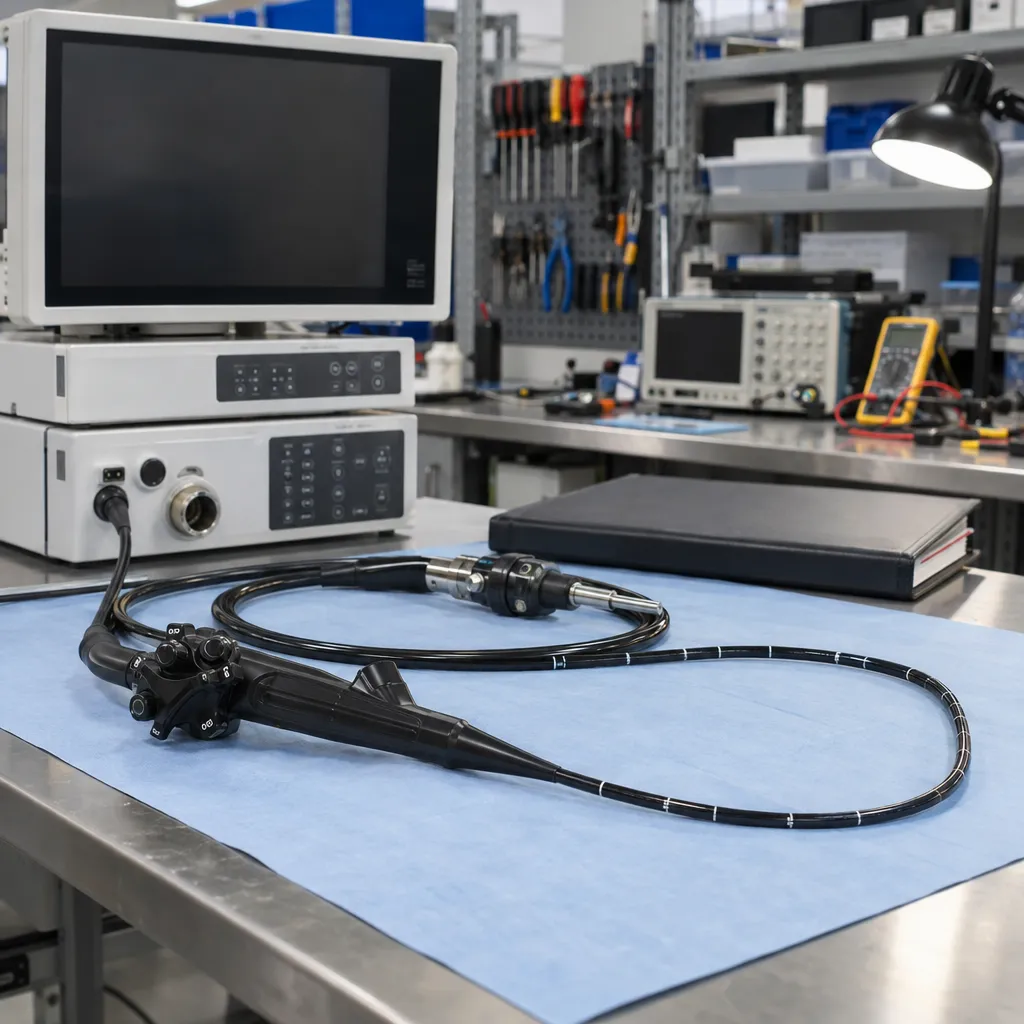
What should a repair quote and a replacement quote each spell out?
A good repair quote needs to do more than show a total amount. It should separate the assessment, identified faults, planned work, intended parts, open assumptions, and expected turnaround time. Just as important, it should state what happens if further damage appears after disassembly. Without that point, offers are difficult to compare fairly.
A replacement quote should at least name the exact device type, the stated condition of the unit, what is included, whether it is currently available, and the expected dispatch or readiness date. With used or refurbished flexible scopes, you should also check whether the offer covers only the scope itself or whether additional accessories must be reviewed separately for your installed setup. Compatibility statements should never be accepted as generic. Instead, confirm each combination against the manufacturer’s information for your own system.
In practice, a side-by-side comparison table works well for both routes:
- exact model designation and serial number of the damaged scope
- described fault based on assessment
- binding and non-binding items in the quote
- parts availability and open risks
- estimated downtime until return or replacement delivery
- scope of supply for the replacement unit
- internal follow-up effort for testing, acceptance, and return to service planning
That keeps you from comparing unlike for unlike. More importantly, it shows whether an apparently low repair price only looks attractive because time risks or extra work have not yet been clearly stated.
Which points should be included in the internal approval?
For biomedical engineering, procurement, and the endoscopy unit, the approval note should be short but defensible. Record the fault, the proposed route, the reasons for that route, and the operational impact. In addition, acceptance testing, calibration where applicable, and clinical commissioning after any repair or replacement remain the responsibility of the buying facility. Do not assume these steps are included unless the quote names them explicitly.
Where leak testing or reprocessing is part of your internal workflow, those steps must follow your facility’s validated protocol and the manufacturer’s instructions for use. For an example of how original model-specific documents can be located, Olympus provides a manuals and instructions for use page. The same principle applies across brands such as Olympus, Pentax, Fujifilm, and Karl Storz: confirm the document set for the exact model before you rely on a repair or replacement pathway.
Practical summary: do not decide on a damaged flexible scope by instinct or by the first number on a quote. Check the fault pattern, parts availability, turnaround time, and quote clarity first. Once those points are clear, you can usually see whether repair, refurbished replacement, or a later new purchase is the more sensible route.
Ratings and Reviews