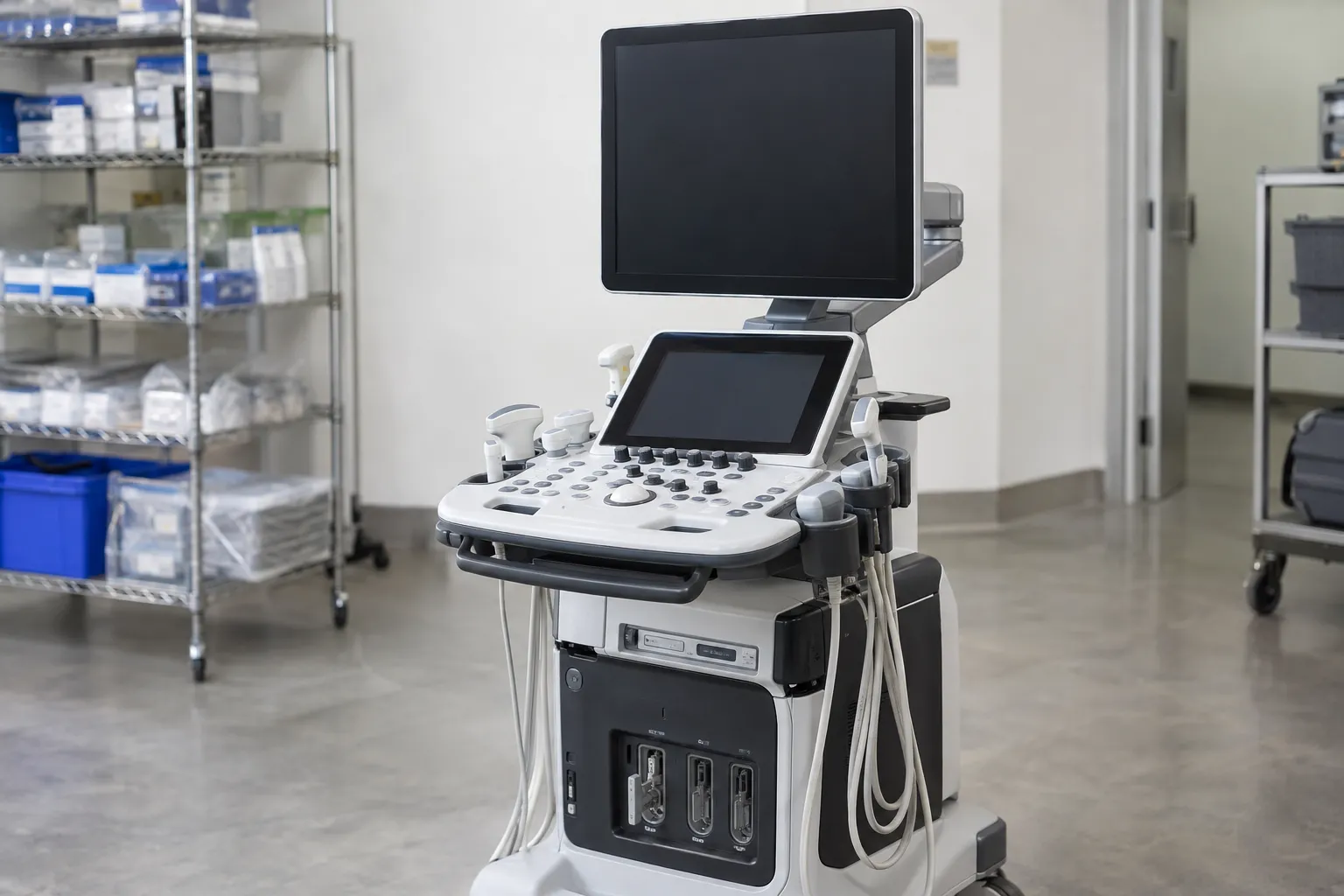
Medical equipment leasing can make sense when you need to protect cash flow, but it is not automatically the safest route for a used or refurbished device. Once you have chosen the equipment itself, the real decision is how the contract fits the device’s expected remaining service life, your planned period of use, and the end-of-term options. This guide compares outright purchase, leasing, rental and hire purchase for used equipment. It is general information only, not financial or tax advice.
Just as important, a leasing, rental or hire purchase contract does not transfer your facility’s operational responsibilities. Acceptance testing, calibration, user training, commissioning and internal release for clinical use still need to be organised by the operating facility under its own procedures before the device is put into service. UK government guidance on responsibilities for using medical devices is a helpful neutral reference point.
When Does Outright Purchase Beat Monthly Payments?
Outright purchase is often the clearer route when you expect to keep the device in service for a longer period and can fund the acquisition from available capital. You agree one total purchase price for a specific model and configuration. As a result, the decision is usually easier to control than a contract that also has to define term length, end-of-term options and return conditions.
By contrast, monthly payment models can suit a tighter operating budget. That may include leasing, rental or hire purchase arranged through your own bank or finance provider. However, used equipment changes the logic. The monthly amount alone tells you very little. You also need to know whether your planned period of use actually fits the contract you are being asked to sign.
In practice, many buyers do best with a two-step approach. First, confirm the exact device, configuration and condition. Only then compare acquisition routes. If you are still narrowing the shortlist, EMTrading’s purchase service for used medical equipment can help you compare suitable models and configurations. You can also review available stock in the used medical equipment catalogue.
Rental is usually more suitable when the need is clearly temporary. For example, you may need a bridge solution until another unit is delivered, repaired or approved for replacement in your budget. Hire purchase can look attractive because it combines use now with possible ownership later. Even so, the label matters less than the written terms. With used equipment, the sensible choice depends on term length, obligations and total risk, not on the product name used by the finance provider.
This article does not repeat every cost item that belongs in your budget. If you need a structured view of freight, installation, accessories, service and similar items, read used medical equipment total cost of ownership alongside this guide.
Does the Term Match the Device’s Expected Remaining Service Life?
This is the main point many generic finance articles miss. With a used device, you should not ask only how long you want to use it. You also need to ask how credible the expected remaining service life is for that exact model in that exact configuration and condition.
Put three timelines next to each other before you sign anything: your planned period of use, the contract term and the device’s expected remaining service life. Those timelines should make sense together. If the contract locks you in for longer than the device is likely to remain a practical fit, you take unnecessary risk. You may still be paying while preparing a replacement or managing higher service demands.
The reverse problem also exists. A term that ends too early can be inconvenient if the device still fits your operational plan well. Therefore, when you compare medical equipment leasing with hire purchase or rental, check the end-of-term options in detail. Is the device returned, purchased, extended or replaced? Do not rely on verbal assurances. Rely only on what the written contract actually says.
For used equipment, expected remaining service life should be judged at device level, not only by equipment category. Look at the exact model, documented condition, known history, parts availability and intended workload in your facility. Ask for the information that affects internal planning, such as available documentation, included accessories, software status, recent checks and the condition of assemblies that matter to your workflow. If key answers remain unclear, choose the contract term more cautiously. Our guides to used medical equipment documentation and spare parts availability show what to ask for.
What Do the Contract Terms Say About Service, Insurance and Return?
With used devices, the heading on the contract matters less than the detail. Review each obligation line by line. That includes service, maintenance, repair responsibility, insurance, transport on return, packaging requirements, notice periods, condition definitions and the treatment of missing accessories or visible wear.
Also keep a clear distinction between the right to use the device and responsibility for operating it safely inside your facility. A rental or leasing contract does not automatically move those duties to the lessor. Before use, healthcare organisations still need local acceptance, calibration where required, user preparation and commissioning under their own procedures.
This point is easy to misunderstand in rental arrangements. Not owning the device does not remove the need to organise acceptance testing, calibration and clinical commissioning internally. The same applies to internal release for use after delivery or installation. The acquisition route changes the payment structure. It does not remove the operating facility’s responsibility to verify readiness before use.
Return conditions deserve close attention. What counts as normal wear and what may lead to additional charges? Must the device be returned with specific accessories, records or service status? Who handles de-installation, packing and transport? The older or more specialised the device, the more important these details become.
If service is included anywhere in the proposal, separate three things during comparison: the equipment itself, the financing method and the service scope. Otherwise, unlike-for-like comparison becomes difficult very quickly. And if a point is missing from the written agreement, it is usually hard to enforce later. Service and repair for devices you own can also be arranged separately through our repair and maintenance service.
Which Questions Belong to Your Tax Adviser and Which to the Supplier?
Your tax adviser should review the tax and accounting treatment of the exact draft contract you are considering. That includes how an outright purchase, leasing arrangement, rental agreement or hire purchase should be treated in your organisation, as well as how related charges and any purchase option are handled. Do not rely on generic internet articles for that. Ask your adviser to review the actual contract wording.
Your supplier or finance provider, by contrast, should answer the factual and contractual questions about the equipment and the acquisition route. For example:
- What exact model and configuration are covered by the contract?
- Which documents are supplied with the device?
- Which services are included, and which are excluded?
- How long is the commitment, and what options exist at the end?
- Who carries which risk for downtime, transport, return and missing accessories?
- Which notice periods and return deadlines apply?
A simple division of work helps. The supplier answers questions about the device, its condition, the scope of supply and the contract obligations. Your tax adviser confirms how that exact contract should be treated in your accounts and tax process. Only when both sides are clear can you judge whether purchase, medical equipment leasing, rental or hire purchase really fits your need.
As a practical rule, do not choose a longer or more complex acquisition route than your requirement justifies. If the device is part of your long-term plan and its condition is well documented, purchase is often the simplest route. If preserving liquidity matters, medical equipment leasing may fit, but only when term length, expected remaining service life and end-of-term arrangements match. If the need is temporary, rental is often easier to control. In every case, the right choice is the one that fits the device and your usage plan, not the one with the most attractive label.
Ratings and Reviews