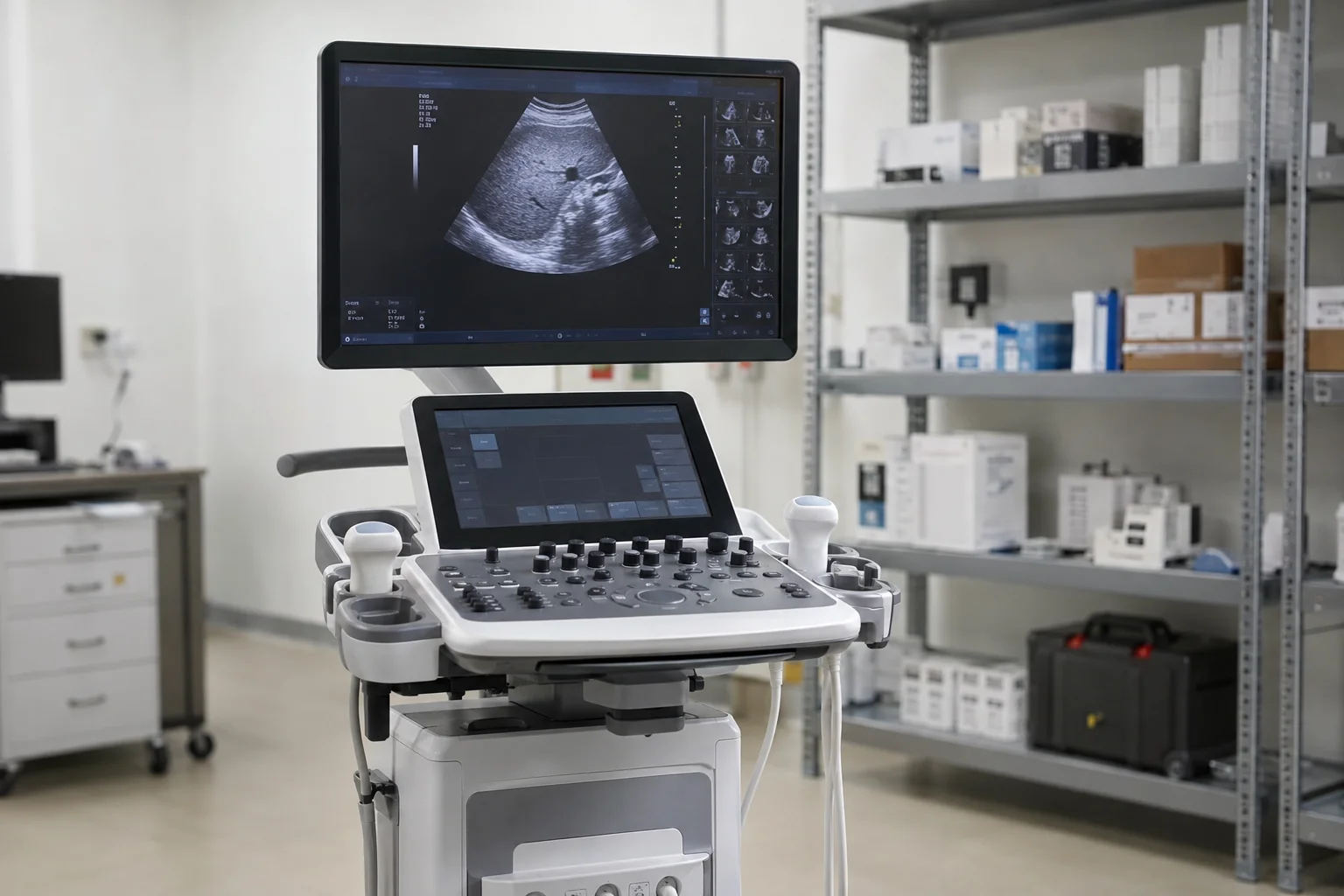
Check medical equipment spare parts availability before you judge cosmetic condition, test results or price. A used device can look sound at inspection and still become hard to keep in service if its exact model, configuration or software version is losing parts, consumables or service support. For biomedical engineers and procurement teams, the practical test is simple: confirm which parts the market still supplies, who can support the unit, and what evidence proves ongoing supply for that exact device.
Why does parts availability decide how long a used device stays usable?
A pre-owned device stays usable only while you can maintain it to the manufacturer’s intended specifications. If a key assembly, routine consumable or approved accessory becomes hard to source, downtime risk rises quickly. As a result, the real buying decision is not only whether the system works today, but whether your team can keep it supportable over your planned ownership period.
This is why condition-led buying can miss the main risk. A device may pass a bench check, yet still be a weak purchase if nobody reliably supplies replacement boards, probes, sensors, lamps, batteries, seals, filters or model-specific kits anymore. In addition, software-dependent systems add another layer of risk. The same hardware family may use different part references depending on configuration or software release, so you need evidence for the exact unit, not assumptions based on the product name alone.
It also helps to separate supply continuity from fit. A part may look similar across a brand range, but you should confirm the part reference against the manufacturer’s compatibility list for that exact model and software version. If fit is your main concern, start with our overview of medical equipment brands and the manufacturer documents for your model.
Supportability also depends on records. A clean service history, repeated access to the same consumables and traceable part numbers all suggest that the device has stayed within a known support chain. By contrast, vague descriptions such as “compatible part” or “equivalent replacement” should trigger more questions, not more confidence.
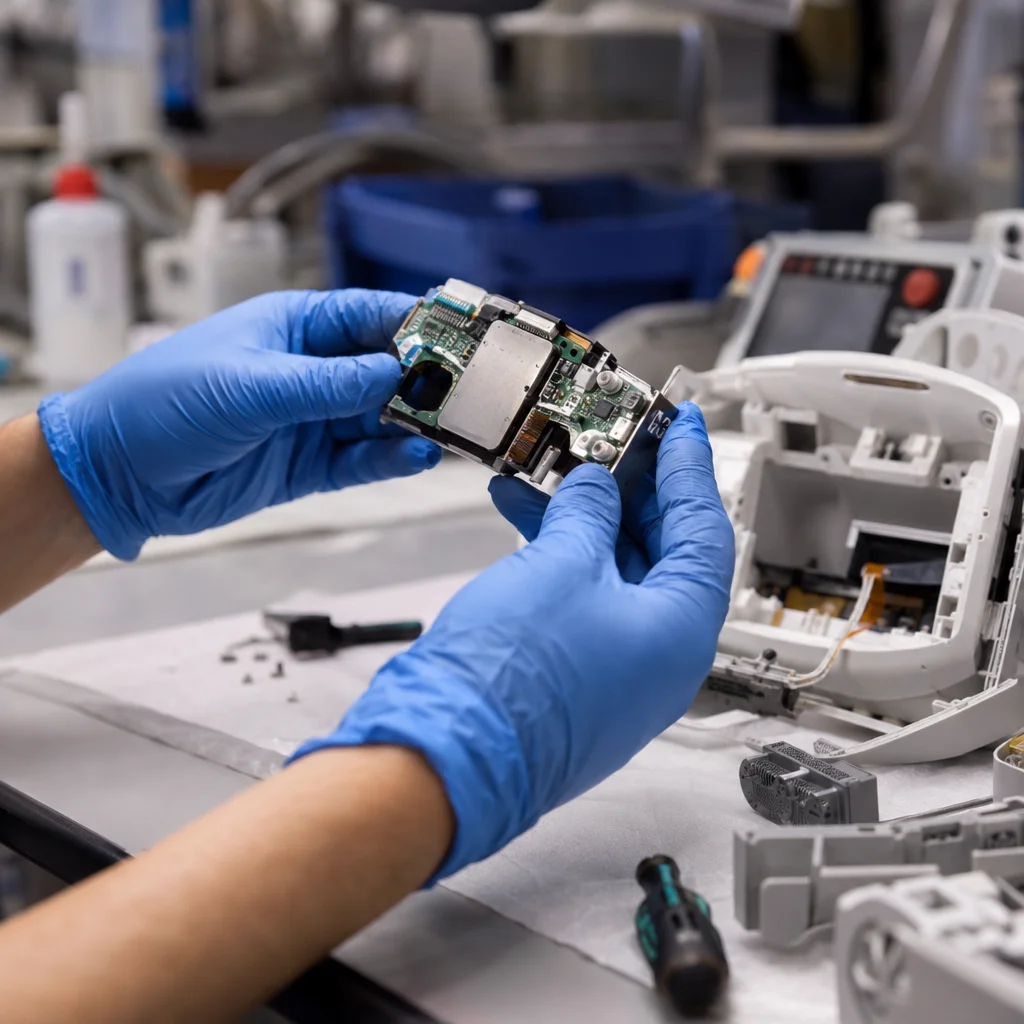
How do you check medical equipment spare parts availability for a model?
Identify the exact unit first
Start with the exact identification of the unit. Record the model name, product code, serial number, installed options and current software version. Without that information, any answer about medical equipment spare parts availability stays too general to support a buying decision.
Then ask for evidence from more than one source. The strongest route is the manufacturer or an authorised service organisation for that model. Many manufacturers run customer portals, service documentation or parts lookup tools that tie part references to specific systems and revisions. For example, Philips offers a Parts Finder in its InCenter customer document center to look up individual part numbers for its products.
Split the check into three lists
- Routine consumables: items your team replaces during normal maintenance or daily operation.
- Wear parts: items with predictable replacement demand, such as seals, cables, keypads, lamps or batteries.
- Critical assemblies: boards, modules, transducers, power components, control panels or other high-impact parts that can stop the unit if you cannot get them.
For each list, confirm the current part reference, whether you can still order it, whether a newer reference has replaced it, and whether supply depends on a software or hardware revision. Also check whether any item is exchange-only, repair-only or available only through defined service channels. That distinction matters because a part can look “supported” on paper and still be hard to obtain in practice.
Ask for proof, not reassurance
Ask the seller for recent evidence. Useful proof includes the last service records, recent parts invoices with visible references, records of recurring consumable purchases and photos of the identification labels. If the seller says a part is available, ask who supplied it, when they sourced it and under which part number. In other words, verify supportability instead of inferring it. Our checklist for used medical equipment documentation lists what that file should contain.
You should also check whether the seller can support the device after delivery. A seller that can point you to stocked items in its spare parts and accessories range and explain its service route offers more than a one-time sale. Likewise, a defined path for inspection, repair coordination and technical follow-up through a repair and maintenance service reduces the chance that the unit becomes an orphan after installation.
Finally, take extra care with software-linked systems. Service documentation often ties procedures, tests and error codes to a specific software version. For a used buyer, software version is part of supportability, not an afterthought.
What does manufacturer end-of-support actually change for the owner?
End-of-support does not always mean a device stops working on that date. However, it can change what the owner can realistically obtain and who can still support the system. Depending on the model, it may affect medical equipment spare parts availability, software updates, security patches, technical assistance, field service or access to current service documentation. Therefore, verify the exact effect with the manufacturer or an authorised service provider for that model.
For the owner, the impact is usually operational. Lead times may grow. Some assemblies may move to limited stock, exchange stock or case-by-case availability. Software changes may become more restricted, and manufacturers typically expect any software or configuration change to follow their own authorised procedures.
End-of-support also changes future budgeting. If a device depends on one hard-to-source module, you may need a stronger contingency plan, a second unit for parts where this is lawful and appropriate, or a shorter ownership horizon. Price that into your used medical equipment total cost of ownership from the start. That is not a reason to reject every older model. It is a reason to buy with a documented support plan rather than on visual condition alone. For the wider picture, see our guide to medical equipment life expectancy.
After any parts work, the owning facility remains responsible for returning the device to service properly. In practice, the owner or its qualified service partner must plan acceptance testing, calibration and any required functional checks before the unit goes back into operation. If a failed part forces the question, our guide on whether to repair or replace medical equipment walks through the decision.
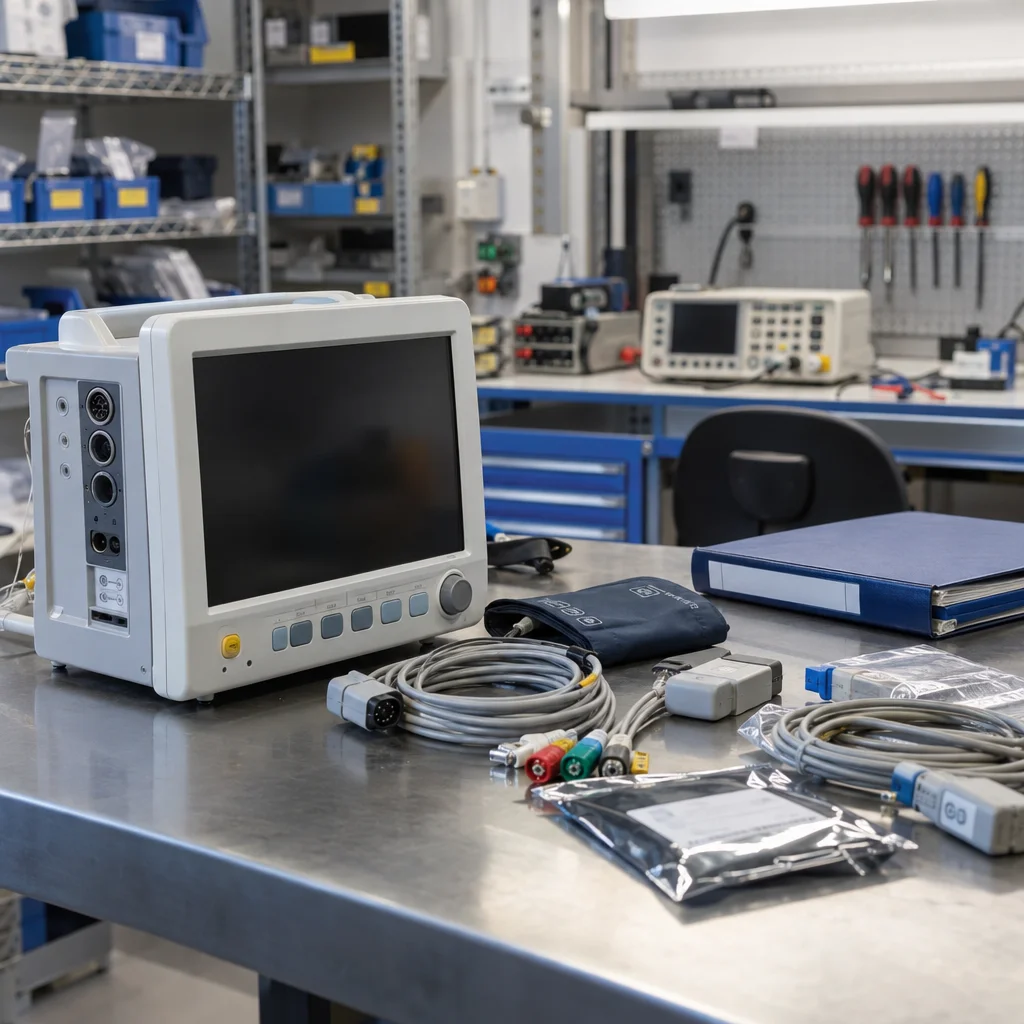
Which questions should you put to the seller before you commit?
Keep the conversation model-specific. Broad assurances such as “parts are available” do not answer the real question. Instead, ask for clear evidence tied to the exact serialised unit.
Ask for identification evidence
- What is the exact model, product code, serial number and installed software version?
- Which installed options or modules change the part references?
- Can you provide photos of the identification labels and key assemblies?
Ask for supportability evidence
- Which routine consumables does this unit need, by exact part reference?
- Which wear parts do engineers commonly replace on this model, and can you still obtain them?
- Which critical assemblies would cause long downtime if they failed?
- Has the manufacturer replaced, discontinued or moved any original parts to exchange-only supply?
- Can you show recent invoices or service records that prove you sourced parts for this model?
Ask about service route and restrictions
- Who services this model today: the manufacturer, an authorised partner or another qualified provider?
- Do the software version, hardware revision or installed options affect current support?
- Which manufacturer service requirements apply to certain repairs?
- Which tests or calibration should we schedule after a parts replacement?
Ask about ownership risk
- What, specifically, could make this unit hard to support over the next few years?
- Which parts should we hold as contingency stock, based on current supply patterns?
- If a critical part becomes unavailable, what is the realistic escalation path?
Also ask one simple closing question: “What evidence would you rely on yourself before committing to this exact unit?” A credible seller answers with documents, part references and support contacts, not only opinions.
As an external benchmark, the US FDA defines servicing as repair or maintenance that returns a device to the original manufacturer’s safety and performance specifications, without changing its intended use. Its 2024 guidance on remanufacturing and servicing explains where that line sits.
Practical summary
Check medical equipment spare parts availability before you buy used, and check it at the level of the exact model, configuration and software version. Confirm current part references, consumables supply, service routes and end-of-support status with documents. If that chain looks weak, the device may still be a poor buy even when it looks good today.
Looking at a specific used device? Contact EMTrading with the model and serial number, and we will tell you what we can confirm about parts and service for that unit.
Ratings and Reviews