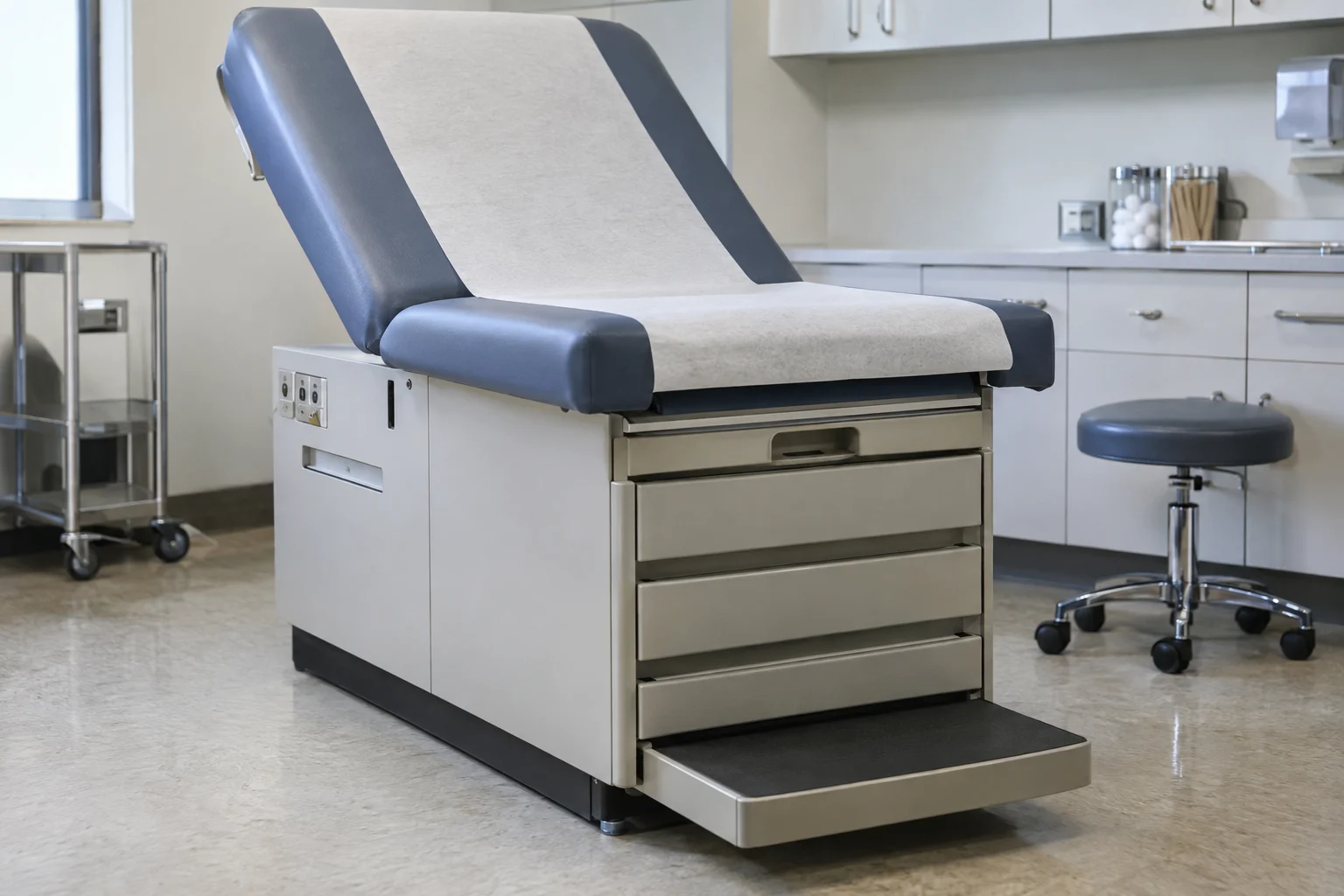
A medical equipment list for new clinic projects should start with rooms and workflows, not with a flat shopping list. First, map what happens in reception, triage, consultation, treatment, storage and back-office areas. Then group purchases into categories. In most clinics, durable diagnostic and room equipment are strong used or refurbished buys, while consumable-contact items, accessories and time-critical small tools are often better bought new. Finally, buy in opening sequence so core rooms can function before you add secondary capacity.
Which rooms and workflows decide your equipment list?
Start by listing rooms, then link each room to a repeatable workflow. That means asking what staff do before the patient enters, during the visit and after the room turns over. This approach is more reliable than copying a generic checklist because it shows which items must sit in every room and which can be shared across the site.
For example, exam rooms usually need a consistent base setup so staff do not leave the room to fetch routine tools. Stocking every exam room the same way also cuts wasted trips during the day, and it helps to map how patients are roomed and discharged before you refine staff roles and space use. WHO planning guidance for health facilities also supports coordinated planning across teams rather than isolated purchasing decisions.
In practice, most buyers break the list into six planning zones: reception and administration, vital-signs or intake areas, consultation and exam rooms, treatment or procedure rooms, diagnostics, and central support spaces such as clean storage, dirty hold, IT and staff work areas. As a result, your list becomes easier to source and phase.
When you draft the first version, keep it at category level. Write “exam couch,” “patient monitor,” “ECG,” “otoscope set,” or “ultrasound,” not a brand or model. That keeps the list flexible while you compare what is sensible to source pre-owned. If you want to review available categories early, use the used medical equipment catalog and the diagnostic equipment category overview as market reference points rather than as a compliance checklist.
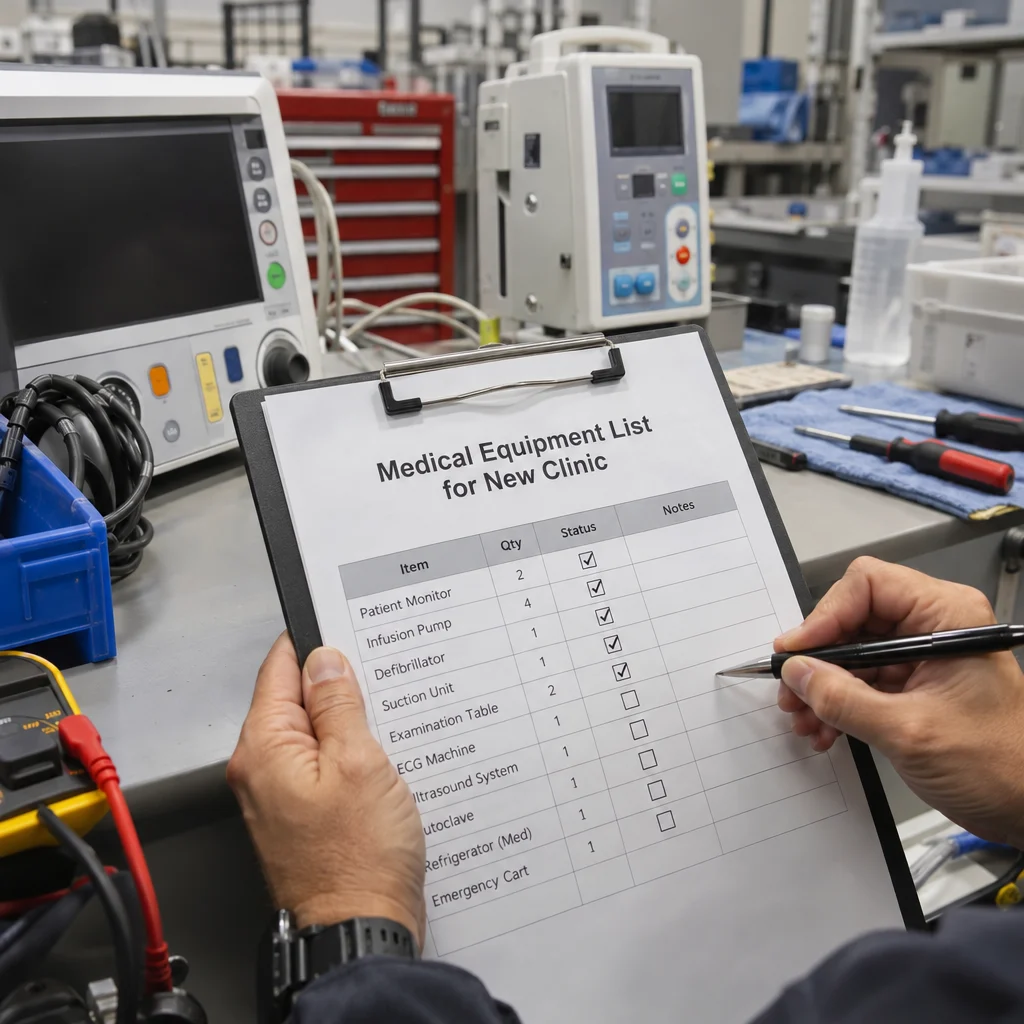
Which categories make sense to buy used or refurbished?
Used or refurbished buying usually works best for durable capital equipment with a long service life, stable demand and clear inspection points. In other words, start with assets that are built to stay in service and that can be checked for condition, completeness and function before purchase.
Room and furniture items
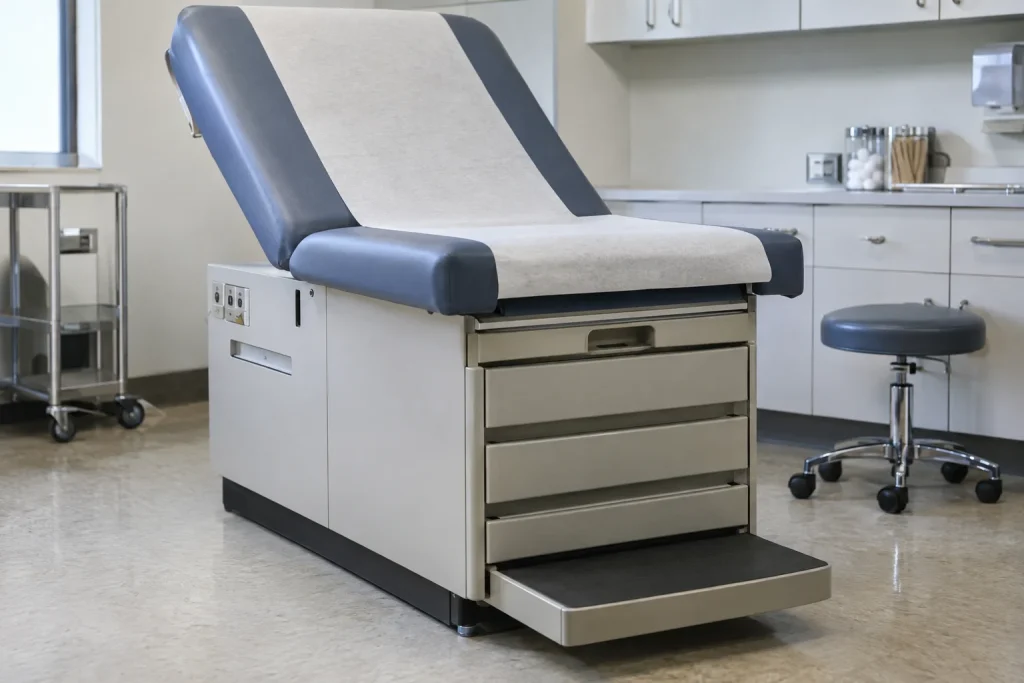
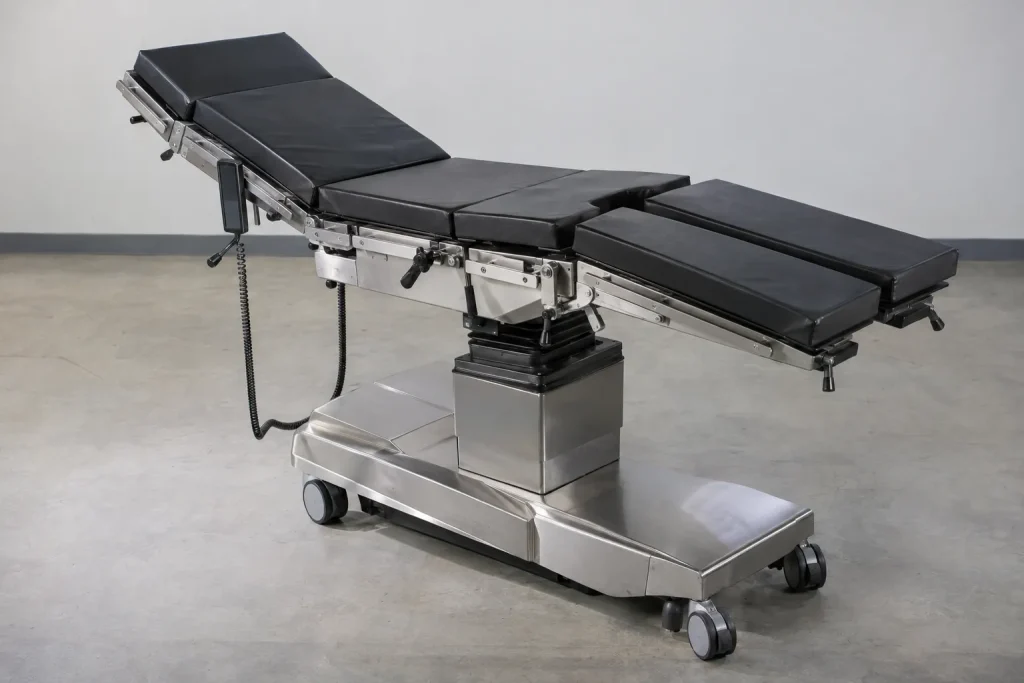
Exam couches, treatment chairs, stools, trolleys, cabinets and instrument stands are often sensible pre-owned buys. They affect room readiness and budget, yet they are generally straightforward to inspect for wear, damage, mobility and cleanliness. In addition, these items rarely need the same sourcing urgency as device-specific accessories.
Core diagnostic devices
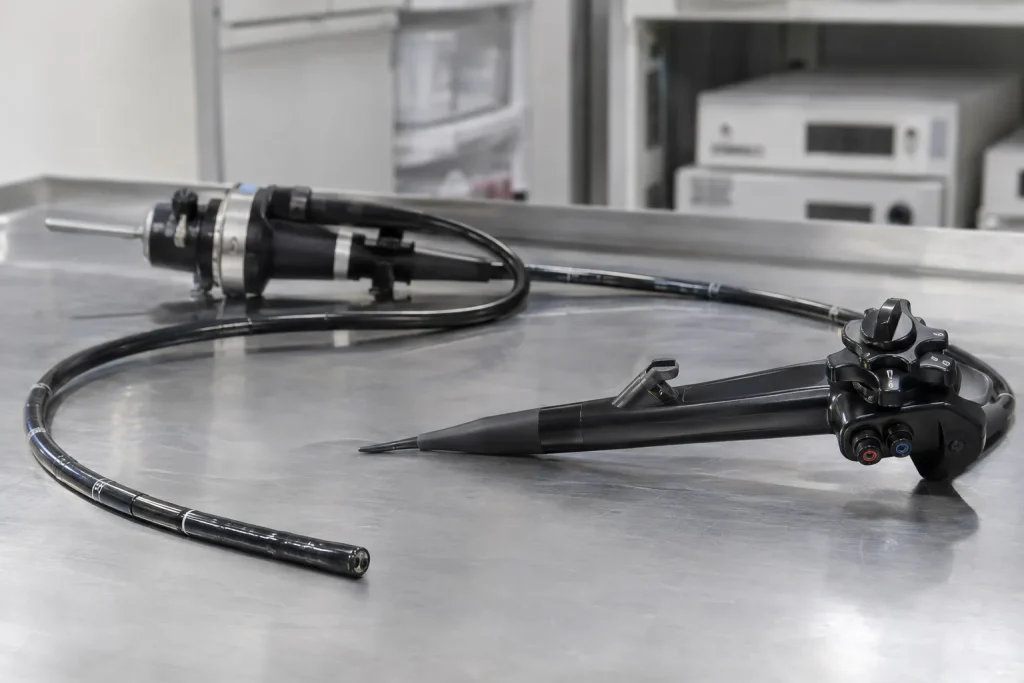
Many clinics also consider pre-owned diagnostic equipment such as patient monitors, ECG units, spirometry systems, ultrasound systems and certain examination lights, depending on the service model and local support options. Here, the advantage is that these categories often exist in a mature secondary market. Therefore, you can compare condition, configuration and included accessories across several offers. You can browse examples in the used medical equipment shop while keeping your shortlist at category level.
Shared equipment
Shared devices are another strong used-buy category because one unit may serve more than one room if workflow allows it. A clinic may not need duplicate units on day one. Consequently, buying one refurbished system first can help the site open while leaving room for later expansion.
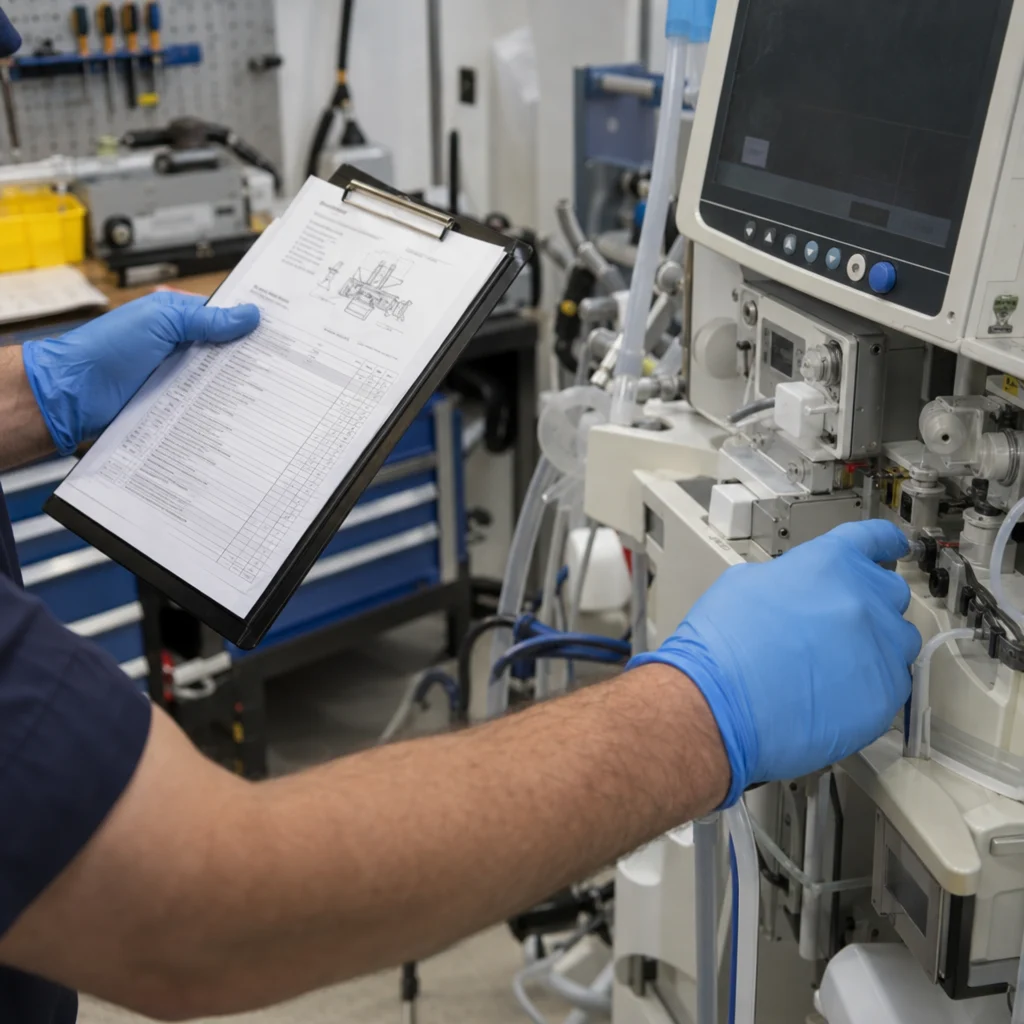
Even so, do not treat any used device as ready for patient use on delivery alone. The buying facility remains responsible for acceptance testing, calibration where appropriate and clinical commissioning before the equipment enters service. WHO defines acceptance testing as the initial inspection before equipment is put into service, and its equipment guidance describes testing, calibration and commissioning as part of the process around installation and first use.
Which items are usually better bought new?
Some categories are usually better bought new because they are low-cost relative to risk, depend on sterile or hygienic presentation, wear out quickly or create avoidable delays when parts are missing. This is where many new-clinic projects lose time, because buyers focus on major devices and forget the small items that stop a room from functioning.
Consumables and patient-contact supplies
Single-use supplies, disposables and routine patient-contact consumables should normally be bought new through standard supply channels. That includes the everyday items needed to open rooms, stock carts and support turnover.
Small accessories and incomplete sets
Cables, cuffs, probes, seals, batteries, printer media, handheld heads and minor attachments often make more sense new, especially if compatibility is unclear. A used main unit can still be a good purchase, but the accessory pack is often where delays and hidden replacement needs appear. Because of that, many procurement teams buy the capital item pre-owned and refresh the accessory layer with new parts.
Fast-moving basic instruments
Basic hand instruments and low-value tools are often easier to standardise new across rooms. That reduces variation at opening and simplifies replenishment. In addition, opening packs and room-ready sets are usually faster to deploy when everything arrives complete and matched.
There are exceptions. A high-quality used device with a documented configuration may still be the right choice, while a new item with long lead times may not help your opening plan. Still, the decision should be practical: buy used where condition and completeness can be verified, and buy new where missing parts or hygiene-related turnover will slow the launch.
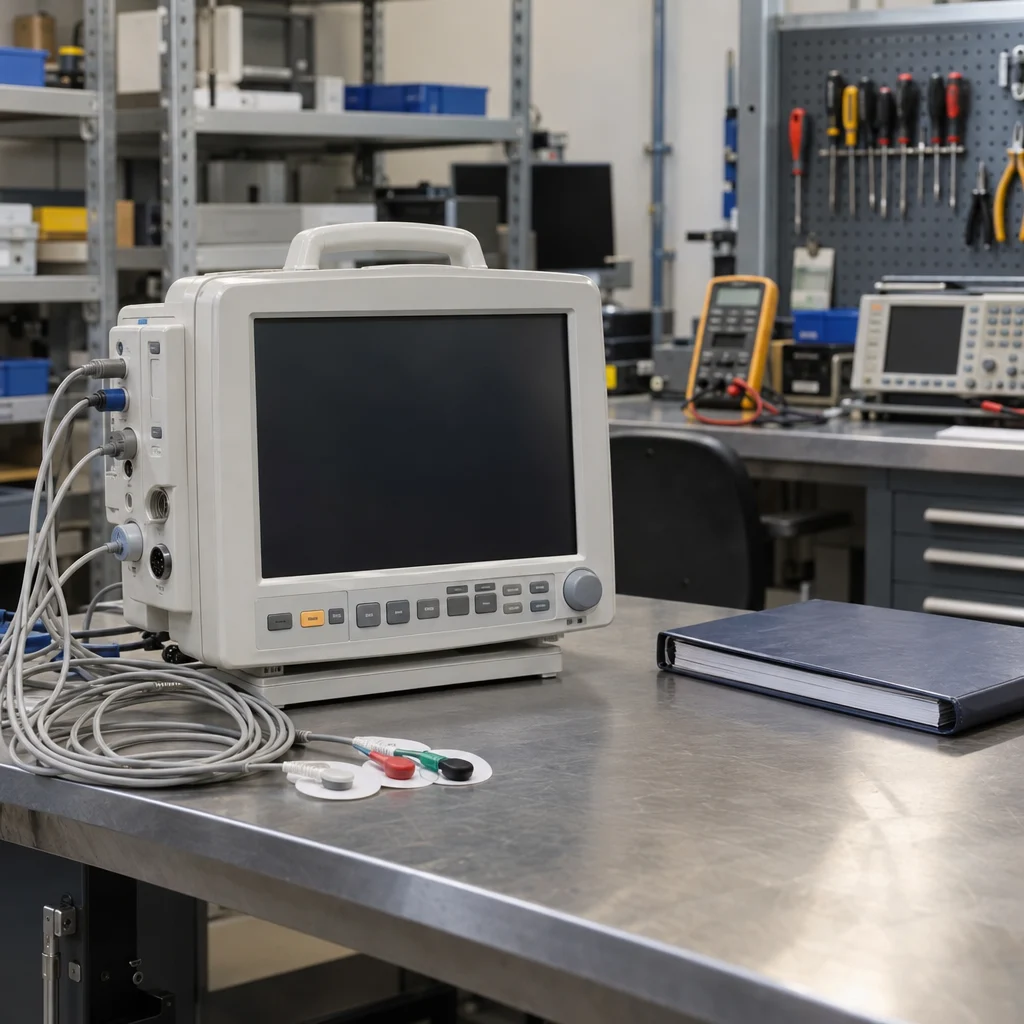
In what order should you buy so the clinic can actually open?
Buy in four waves. That sequence keeps the project tied to opening readiness instead of turning into a scattered list of quotes.
Wave 1: Define the minimum opening rooms
First, decide which rooms must function on opening week. Usually that means reception, at least one fully equipped consultation or exam room, staff workspace, basic storage and any essential diagnostic room for the planned service mix. Keep this phase strict. If a room is not needed to begin operations, move it to a later wave.
Wave 2: Lock in long-lead capital categories
Next, request quotes for the used or refurbished categories that shape room layout and readiness. This often includes exam furniture, larger diagnostics and shared equipment. At this stage, confirm not only the main unit but also the included accessories, power requirements, software generation if relevant, manuals and handover condition. How to prepare the room and the delivery is covered in our guide to medical equipment installation planning.
Wave 3: Add new accessories and room-completion items
After the core capital items are identified, buy the new accessories, consumables and room-completion items that make each space usable on day one. This is where missing cuffs, leads, probes, paper, bins, holders and mounting items usually surface. Because these pieces are easy to overlook, convert each room into a simple readiness checklist before placing the order.
Wave 4: Expand capacity after opening readiness is covered
Finally, add second-room duplicates, overflow capacity and specialty extras once the minimum opening model is secure. This protects capital budget and reduces the chance of buying equipment that sits idle while the clinic is still solving workflow issues.
Throughout all four waves, keep two cautions in view. First, this is not a legal or accreditation checklist. The facility must confirm its own requirements with the relevant competent authority and professional body. Second, after delivery, acceptance testing, calibration and clinical commissioning remain the buying facility’s responsibility before equipment goes into service. For servicing equipment once the clinic is running, see our repair and maintenance service.
Practical summary: build your medical equipment list from rooms and workflows first. Source durable room equipment, shared devices and many diagnostic categories from the used or refurbished market. Buy consumables, fast-wear accessories and room-completion basics new. Then purchase in waves so the clinic can open with core rooms ready before you add extra capacity.
Ratings and Reviews