Medical equipment installation planning should be finished before you approve shipment, not after the unit is on the truck. For a used system, the risk is simple: the device arrives, but the access route is blocked, the room is not ready, or no one is contracted to rig, install and commission it. Therefore, before delivery, confirm the exact model documents, survey the route and room, verify utilities against the manufacturer’s planning information, and agree the handover boundaries in writing.
What has to be confirmed before a used device is shipped to you?
Start with the exact device identity and the exact scope of supply. A used system is rarely a single box. It may include a main unit, tables, stands, coils, workstations, displays, accessories, cables, mounting parts and software-related components. In addition, de-installation, packing and transport can change how many crates arrive and how each part must be handled on site.
Next, obtain the manufacturer’s site planning or pre-installation document for that exact model and configuration. Do not rely on a similar model, an older room drawing or a verbal summary. Manufacturers publish planning resources for this purpose. For example, GE HealthCare states that site-specific planning requires the applicable pre-installation manual and final installation drawings, while Siemens Healthineers and Philips also provide site planning resources and planning documents for imaging systems. GE HealthCare site planning resources are a useful example of the type of document buyers should request for the exact system.
Then put the responsibilities in writing before shipment. Your purchase file should show who is responsible for de-installation at origin, condition recording before packing, transport packaging, unloading, moving into the building, rigging, physical installation, utility connection, startup support and formal handover. If you are sourcing pre-owned imaging equipment, it also helps to review the likely equipment family early so the site survey matches the system type; EMTrading’s used imaging equipment range gives a practical sense of the systems that often need more detailed delivery planning.

How do you survey the access route and the installation room?
Survey the route from the delivery vehicle to the final room, not just the room itself. First, walk the full path with facilities, biomedical staff and the installation provider if one has already been appointed. Include the unloading area, external approach, ramps, lifts, corridors, door sets, corners, temporary obstructions and the final positioning area. Because a used system may arrive in crates or in separated subassemblies, ask for the packed dimensions and handling method for each major item in writing from the seller or service provider.
Also confirm building-side constraints that can stop a delivery on the day. For example, some sites need booked loading slots, lift reservations, after-hours access, floor protection, permits for temporary road use or a porterage plan. If third-party rigging is needed, agree when the equipment changes hands and who signs for visible condition at each stage. That matters more with second-hand equipment, because the unit has already been de-installed once and may pass through several parties before it reaches your room.
Inside the room, compare the manufacturer’s planning document with the actual layout. Check where the system will sit, where accessories will be stored, how service access will be maintained and whether supporting rooms are ready if the configuration includes consoles or ancillary equipment. However, do not convert general planning drawings into construction instructions. GE HealthCare notes that its planning drawings are produced to assist with site planning and are not intended as construction drawings, and it places responsibility on the customer or designated engineers to ensure they have the latest information and comply with applicable requirements.
Finally, document the survey. Use marked-up photos, room sketches, route notes and a short action list with owners and dates. If you expect help with placement, removals or installation coordination, define that scope early with a qualified service provider. For questions about servicing a system before or after delivery, you can also contact EMTrading’s repair and service team.
Which utilities, power and network points need to be in place?
The safe answer is always model-specific: use the manufacturer’s site planning or pre-installation document for that exact system, and have qualified professionals verify the room against it. Do not guess from the appearance of the device, and do not copy requirements from another installation. A used system may have optional components, local adaptations or room dependencies that change what must be ready before delivery.
In practice, that means confirming the utility list with the installer and your facilities team in advance. Depending on the system, that can include electrical supply arrangements, grounding arrangements, network points, data routes, ventilation or cooling dependencies, drainage or water-related services, shielding-related building work where relevant, and space for any external cabinets or support equipment. Because these are building and safety matters, your electrician, building engineer, structural engineer or other qualified provider should verify them against the current manufacturer documentation for the exact model.
Network readiness often gets left too late. Therefore, identify early whether the system needs network drops, IP allocation, VLAN planning, domain or security review, DICOM or HL7 interface work, printer connections, remote service access or integration with existing archives and workstations. Even when the hardware can be placed in the room, the system may still not be ready for operational handover if those steps are unfinished.
Used equipment adds another layer. Ask what is included at handover: only physical placement, or also reconnection of supplied peripherals, workstation setup, basic communication checks and application startup. If you are still comparing options, EMTrading’s medical equipment shop can help you map likely accessory sets and system layouts before you freeze the room plan.
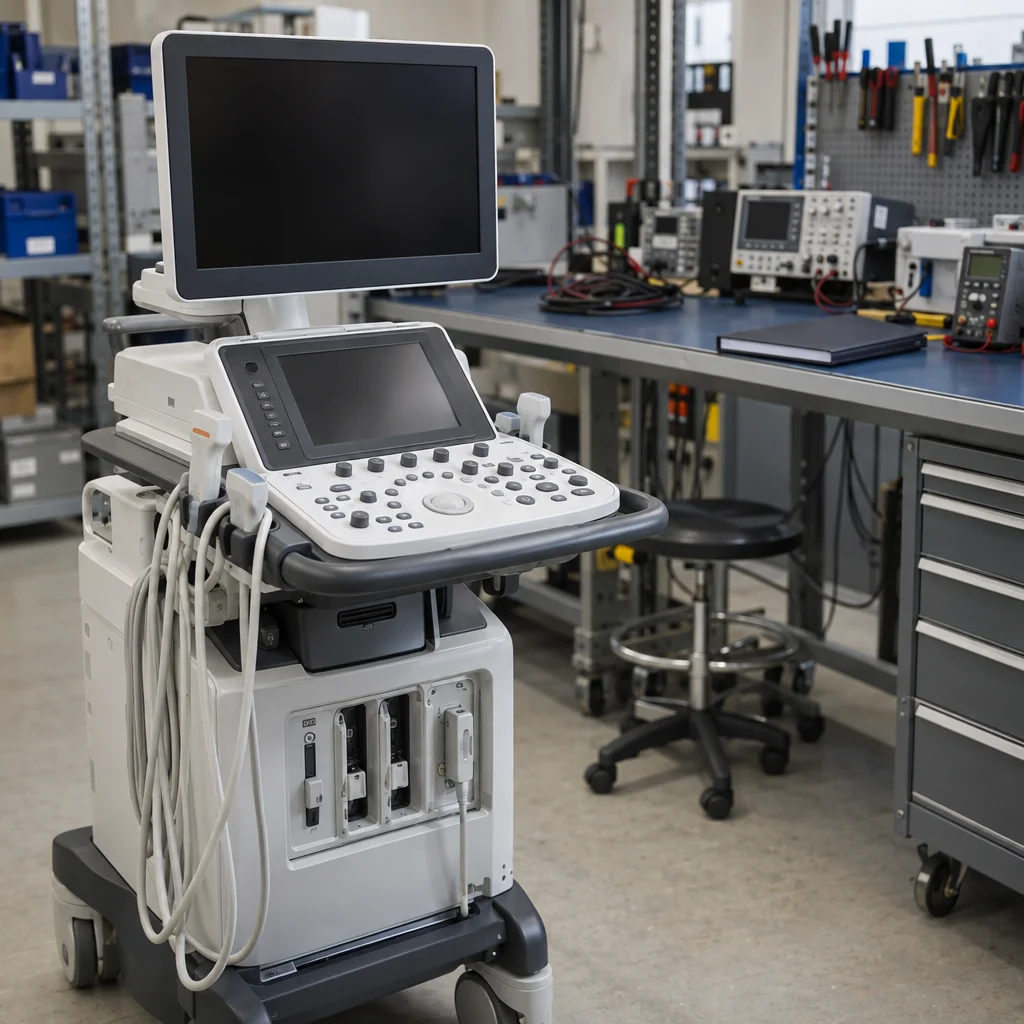
Who is responsible for rigging, installation and commissioning?
This is the point many buyers settle too late. “Delivery” is not the same as unloading. “Installation” is not the same as commissioning. And “commissioning” is not the same as clinical release. Unless the boundaries are written down before shipment, gaps appear exactly when the equipment arrives.
First, define rigging. State who unloads the shipment, who provides lifting equipment if required, who moves each crate or subassembly through the building, who removes packing, and who is liable if access conditions on site do not match the agreed survey. If there is a handoff from freight carrier to rigger to installer, record each handoff point and the method for noting visible transit damage.
Second, define installation. State who positions the system, assembles supplied components, connects the equipment to prepared services where permitted, performs startup tasks within their competence and identifies missing items. For used systems, it is especially important to list exclusions. If cabling extensions, builder’s work, wall supports, network activation, removals, waste disposal or room reinstatement are not included, the document should say so plainly.
Third, define commissioning and acceptance. The buying facility should treat acceptance testing, calibration, radiation-protection approval where relevant, and clinical commissioning as its own responsibility unless a separate written scope assigns parts of that work to named qualified providers. Likewise, if applications support, user familiarisation or IT integration is expected, identify who provides it and what counts as completion. Keep those boundaries factual and specific rather than assumed.
A simple written scope helps. It should identify the exact model and serialised items where available, the site contact list, route and room assumptions, required pre-delivery actions, delivery condition records, installation exclusions, target handover point and the documents to be exchanged at completion. Above all, make sure the install scope is quoted and agreed before shipment is authorised.
Practical summary
Before a used device ships, settle four things in writing: the exact system and included parts, the surveyed access route and room, the verified site utilities based on the manufacturer’s current planning document, and the boundary between delivery, rigging, installation and commissioning. As a result, you reduce the risk of a preventable delay on arrival. For pre-owned systems, that discipline matters more, because de-installation, repacking and third-party handling create extra points where assumptions can fail. If you are equipping a whole new clinic, see also what to buy first for a new clinic.
Ratings and Reviews